
 Gold IRA
 Silver
 Gold
Gold Platinum
 Palladium
 Bitcoin
 Ethereum
 Gold Calculators
 Questions? Call (626) 605-3152
Silver Bars (2026 Reviews): Buyer’s Guide, Prices, Sizes & Where to Buy
Disclosure: We are reader-supported. If you purchase from a link on our site, we may earn a commission. Learn more
Last Updated on: 5th February 2026, 10:05 am
If you’re shopping for silver bars in 2026, here’s the simple rule: most bars sell for spot price + a premium, and the “best” bar is usually the one that fits your goal (lowest premium, easiest resale, easiest storage) without overpaying on fees, shipping, or taxes.
Want a quick, plain-English walkthrough on buying physical metals, avoiding markups, and building a sensible allocation? Get the GoldenCrest Metals free 2026 investor’s guide.
Disclosure: If you request the guide through our link, we may earn a commission at no extra cost to you.
- Best “value” size: 10 oz is a common sweet spot for premiums, storage, and resale.
- Lowest hassle to resell: widely recognized bars from major mints/refiners, kept in original packaging when possible.
- Most important number: total cost per ounce after premium, shipping, payment method fees, and taxes.
- One concept to learn: a troy ounce is the standard for precious metals (not the same as a kitchen ounce).
Table of Contents
- What are silver bars?
- Silver bar sizes: which one should you buy?
- How silver bar pricing works (spot price + premium)
- Where to buy silver bars in 2026
- How to avoid fake silver bars and common buying traps
- Storage: home, bank box, or private vault?
- Taxes and reporting (U.S. focus)
- Can you buy silver bars in an IRA?
- Silver Bars FAQ
What are silver bars?
Silver bars are investment-grade pieces of refined silver, typically .999 fine (99.9% pure). Most are produced by well-known mints and refineries and come stamped with weight, purity, and a hallmark. They’re popular because you’re buying silver content directly, often with lower premiums than many collectible coins.
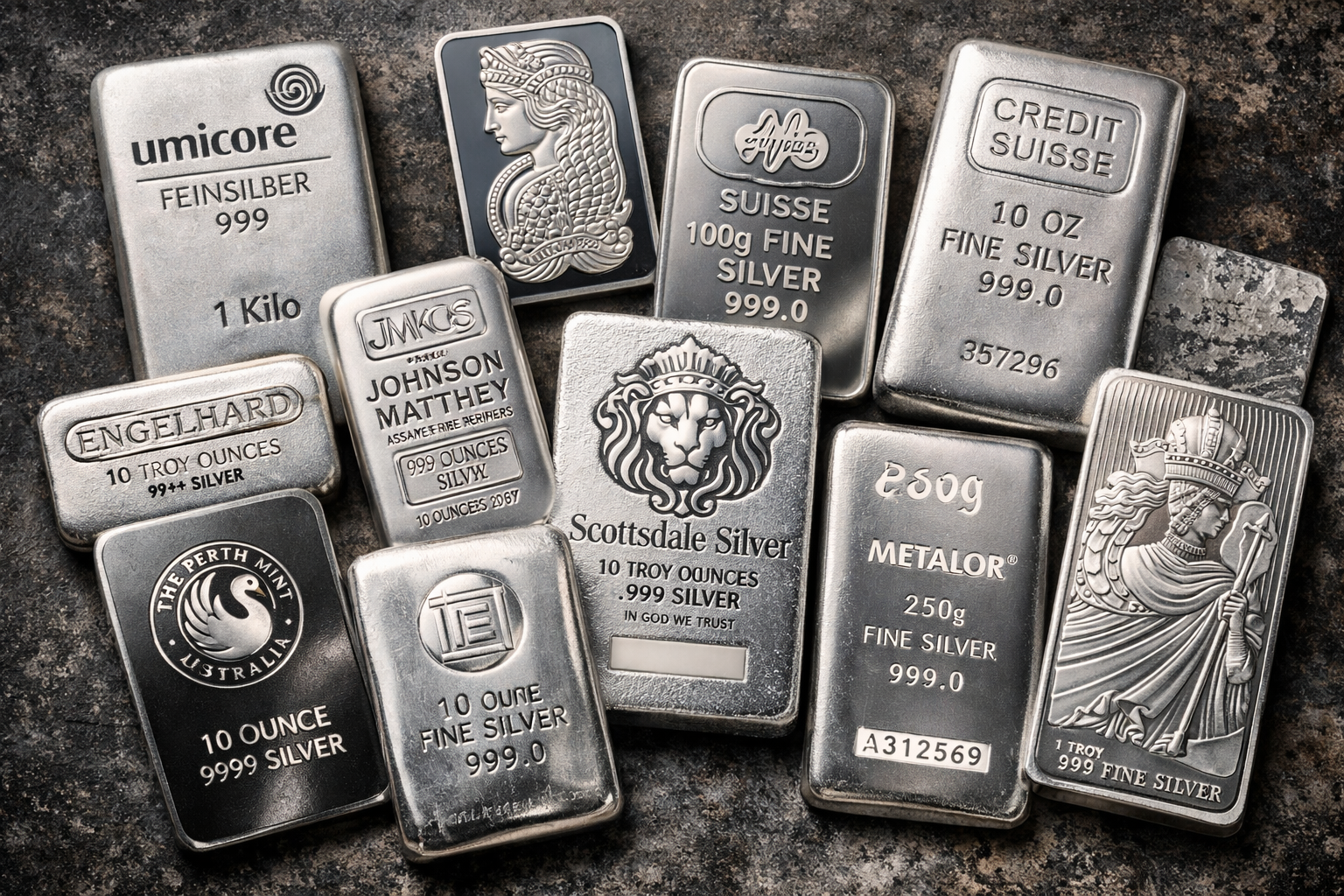
If you want the bigger picture on why people add metals at all (and when it makes sense), start with our overview on why some investors diversify with silver, then come back here for the practical buying decisions.
| Brand / Refiner | Country / Mint | Common Sizes | Typical Purity | Premium Tendency | Security / Recognition Notes | Best For |
|---|---|---|---|---|---|---|
| PAMP Suisse | Switzerland | 1 oz, 10 oz, 1 kg | .999+ | Medium–Higher | Very recognizable; many minted bars come sealed with assay cards (varies by series). | Giftable bars, high-recognition minted bars |
| Royal Canadian Mint (RCM) | Canada (sovereign mint) | 10 oz, 100 oz, 1 kg | .9999 (common) | Medium | Government mint reputation; strong resale recognition. | Long-term holders who value mint credibility |
| The Perth Mint | Australia (sovereign mint) | 1 oz, 10 oz, 1 kg, 100 oz | .9999 (common) | Medium | Widely recognized globally; popular for kilo bars. | Liquidity + premium balance |
| Asahi Refining | Japan / North America | 1 oz, 10 oz, 1 kg | .999+ | Lower–Medium | Common at major dealers; straightforward “stacker” bars. | Cost-efficient stacking |
| Sunshine Minting | USA | 1 oz, 5 oz, 10 oz, 100 oz | .999+ | Lower–Medium | Many bars include anti-counterfeit micro-mark features (varies by product line). | Practical buyers who want common sizes |
| Scottsdale Mint | USA | 1 oz, 10 oz, 20 oz, 100 oz | .999+ | Medium | Distinctive designs (e.g., “stacker” look); strong online recognition. | Collectors who still want bullion utility |
| Valcambi | Switzerland | 1 oz, 10 oz, 1 kg (incl. divisible styles in some series) | .999+ | Medium | High refinery reputation; some products focus on convenience/portioning. | Buyers who value Swiss brand recognition |
| Heraeus | Germany | 1 oz, 10 oz, 1 kg | .999+ | Medium | Strong European recognition; many minted bars come sealed with assays (varies). | International buyers / European brand preference |
| Metalor | Switzerland | 10 oz, 1 kg, 100 oz (varies by market) | .999+ | Lower–Medium | Well-known refiner; tends to trade like “serious bullion” vs novelty bars. | Value-focused investors who still want a top refiner |
| The Royal Mint | United Kingdom (sovereign mint) | 10 oz, 1 kg (varies by program) | .999+ | Medium | Government mint reputation; often bought alongside Britannia products. | Sovereign-mint preference / UK market |
| Johnson Matthey (vintage) | UK (historic refiner) | 1 oz, 10 oz, 1 kg, 100 oz (older bars) | .999+ (varies by era) | Higher | Often carries collector premium; verify markings/serials carefully when buying secondary market. | Collectors who also want bullion exposure |
| Engelhard (vintage) | USA (historic refiner) | 1 oz, 10 oz, 100 oz (older bars) | .999+ (varies by era) | Higher | Highly collectible; premiums can be significant depending on stamp/series. | Collectors and vintage-bar fans |
If you’re buying for pure liquidity, stick to widely recognized bars in common sizes (10 oz and 1 kg are popular).
Silver bar sizes: which one should you buy?
Sizes range from 1 oz all the way up to 100 oz and 1 kilo. As a general pattern, larger bars often have lower premiums per ounce, but they can be less flexible to sell in smaller chunks.
| Size | Best for | Typical tradeoff | Quick tip |
|---|---|---|---|
| 1 oz | Small budgets, gifts, maximum flexibility | Premiums can be higher per ounce | Compare total cost per ounce after shipping |
| 5 oz | A middle ground without “big bar” weight | Not always as liquid as 1 oz or 10 oz | Choose recognizable brands |
| 10 oz | Most buyers seeking strong value and easy resale | Less “fractional” flexibility than 1 oz | Often a premium sweet spot |
| 100 oz | Lower premium stacking, larger allocations | Heavier to store and less flexible to sell | Keep purchase receipts and verify dimensions |
| 1 kilo | Value-focused buyers who like “brick” format | Liquidity varies by local demand | Stick to top-tier mints/refiners |
If you want examples of widely recognized products, here are a few formats many investors know: PAMP Suisse bars, Royal Canadian Mint silver bars, and popular 10 oz options like the 10 oz Sunshine bar. The core buying logic is the same: weigh brand recognition, premium, and resale convenience.
Silver bars are priced from the live spot price of silver, then the seller adds a premium. That premium covers manufacturing, distribution, inventory risk, and the dealer’s margin. Your final “all-in” cost can also include shipping, insurance, and payment method fees.
- Calculate total price paid (including shipping and fees).
- Divide by the number of ounces you’re buying.
- Compare the all-in cost per ounce across sellers.
If you’re also considering adding gold alongside silver (or you’re unsure how to split the two), you might like our primer on how to buy silver and gold without getting lost in jargon.
Where to buy silver bars in 2026
Most buyers choose between online bullion dealers and local coin shops. Big-box and marketplace buys exist too, but your priority should be authenticity, total cost, and a straightforward buyback path.
often more inventory, easier price comparisons, frequent sales.
shipping/insurance costs, delivery time, and you must trust the seller.
immediate pickup, face-to-face questions, sometimes easier selling later.
prices vary more, limited inventory, and some shops focus on collectibles.
Before you buy, make sure you understand your exit plan too. If you want a clean overview of how selling typically works (and how dealers calculate buyback offers), read our guide to selling gold and silver.
How to avoid fake silver bars and common buying traps
The best defense is boring but effective: buy recognizable products from reputable sellers, keep documentation, and avoid deals that feel rushed or “too good to be true.”
- Check the basics: weight, purity stamp (.999), hallmark, and packaging.
- Match published dimensions: reputable brands have consistent size specs.
- Be cautious with marketplaces: verify seller history and return policies.
- Keep your receipts: they help with resale, insurance, and tax records.
- Watch for pressure tactics: “limited time” pitches are a red flag.
For a deeper look at the patterns scammers use, see our roundup of common precious-metals scams and how to spot them early.
If you want a quick checklist for choosing sizes, understanding premiums, and building a balanced gold/silver position, GoldenCrest’s free 2026 guide is a solid starting point.
Disclosure: If you request the guide through our link, we may earn a commission at no extra cost to you.
Storage: home, bank box, or private vault?
Storage is where “cheap silver” can quietly become expensive if you ignore risk. Silver is bulky compared to gold, so your plan matters sooner than you think.
- Home storage: convenient, but think about security, privacy, and insurance coverage limits.
- Bank safe deposit box: can be affordable, but access is limited to bank hours and policies vary.
- Third-party vaulting: built for metals storage, usually includes better documentation and handling.
Taxes and reporting (U.S. focus)
Taxes vary by situation, and this is not tax advice. The two big areas to understand are: (1) sales tax when you buy, and (2) capital gains when you sell.
1) Sales tax depends on your state
Some states exempt bullion above certain thresholds. Others tax it like tangible personal property. The most reliable sources are your state’s official tax agency pages. Here are three good starting points:
California CDTFA (coins & bullion guidance),
Texas Comptroller (sales tax publications),
and
New York Department of Taxation (coins & bullion sales tax).
2) Capital gains when you sell
In the U.S., precious metals can be treated as collectibles for tax purposes in certain scenarios. For the most authoritative baseline, review IRS Publication 550 and talk to a tax professional if you have a large sale, short holding period, or complex situation.
Fraud and investor protection
If you ever feel pressured or unsure, it’s worth reading the CFTC’s precious metals advisories on common traps in the market.
Can you buy silver bars in an IRA?
In many cases, yes, but it typically requires a self-directed IRA and the metal must meet fineness standards and be stored with an approved custodian/depository (not at home). If you’re exploring this route, start with our overview on investing in precious metals through an IRA and confirm rules with your custodian before making any purchase.
The fastest way to avoid overpaying is to follow a consistent checklist. GoldenCrest’s free 2026 guide lays out the basics clearly, including common premium traps to avoid.
Disclosure: If you request the guide through our link, we may earn a commission at no extra cost to you.
Silver Bars FAQ
Below are quick, direct answers to the questions people ask most when researching silver bars in 2026.
Are silver bars a good investment in 2026?
What is the best silver bar to buy for beginners?
Is it better to buy 1 oz or 10 oz silver bars?
Do silver bars sell for spot price?
What does “.999 fine silver” mean?
Are minted bars better than poured bars?
Where is the best place to buy silver bars online?
Is buying silver bars locally safer than online?
How can I tell if a silver bar is real?
Do silver bars have serial numbers?
Do I have to pay sales tax on silver bars?
Can silver bars be held in a self-directed IRA?


 Gold: $4,119.22
 Silver: $57.73
 Platinum: $1,652.87
 Palladium: $1,103.04
 Bitcoin: $82,787.59
 Ethereum: $2,450.43