

 Gold IRA
 Silver
 Gold
Gold Platinum
 Palladium
 Bitcoin
 Ethereum
 Gold Calculators
 Questions? Call (626) 605-3152
Gold with a SEP IRA: Ultimate Guide (2026)
Disclosure: We are reader-supported. If you purchase from a link on our site, we may earn a commission. Learn more
Has your company adopted a SEP IRA to provide retirement benefits? Or are you self-employed and using a SEP IRA through your business? SEP IRAs can be a simple and powerful way to save for retirement, but can they also help you diversify by investing in physical gold and silver bullion.
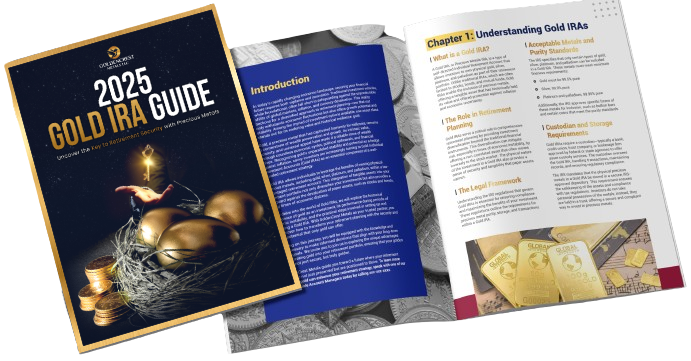
Free SEP IRA to Gold Checklist (2026 Guide)
If you are comparing a SEP IRA vs a precious metals IRA, this free guide covers eligible metals, storage rules, rollover gotchas, and the fee questions business owners should ask before moving any retirement money.
Disclosure: If you request the guide through our link, we may earn a commission at no extra cost to you.
Below I will break down what a SEP IRA is, how it compares to other retirement accounts, and the practical steps people take when they want physical precious metals inside a retirement plan.
Table of Contents
- SEP IRA 101 (Simplified Employee Pension)
- Can a SEP IRA invest in physical gold and silver
- SEP IRA vs. Traditional IRA vs. 401(k) vs. other retirement accounts
- Types of gold you can invest in through a SEP IRA
- Physical gold vs. paper gold investments: how do they compare
- Learn more about precious metals in a SEP IRA
- SEP IRA and gold FAQ
SEP IRA 101 (Simplified Employee Pension)
A SEP IRA is an employer-sponsored retirement plan that works through SEP-IRAs (which are traditional IRAs created for each eligible employee). The big idea is simplicity: the employer contributes, the employee is always 100% vested right away, and the plan can be set up and funded with relatively low administrative hassle. The IRS overview of SEP plans is a good baseline reference if you want the official rules straight from the source.
IRS: Simplified Employee Pension plan (SEP)
Who can participate (eligibility basics)
Most SEP plans must include employees who meet these requirements (your plan can be less restrictive, but not more restrictive):
- Age 21 or older
- Worked for the employer in at least 3 of the last 5 years
- Met the minimum compensation threshold for the year
That minimum compensation threshold is adjusted over time. For 2026, the IRS cost-of-living adjustments list the SEP compensation threshold as $800.
IRS Notice 2025-67 (2026 retirement plan COLA adjustments)
SEP IRA contribution limits (updated for 2026)
This is where SEPs shine. SEP contributions are employer contributions only (employees generally cannot salary-deferral contribute to a SEP, unless you are talking about older SARSEP plans that are no longer available to new adopters). For 2026, the maximum SEP contribution is generally the lesser of:
- 25% of compensation, or
- $72,000 (the 2026 defined contribution plan annual additions limit that also governs SEP caps)
The official 2026 limit is stated in the same IRS COLA notice linked above. If you are self-employed, the calculation is based on net earnings from self-employment and has its own worksheet-style math, so it is worth double-checking with a tax pro before you assume you can simply take 25% of gross revenue.
Can a SEP IRA invest in physical gold and silver
Yes, a SEP IRA can hold physical precious metals, but not automatically in the way most people imagine. A SEP IRA is still an IRA under the hood. That means whether you can buy bullion usually comes down to your custodian and whether you are using a self-directed structure.
In many mainstream brokerage SEP IRAs, you might be limited to “paper gold” exposure like gold ETFs or mining stocks. If you want IRS-eligible physical bullion stored properly for the IRA, most investors use a self-directed IRA approach with a custodian that supports precious metals and uses an approved storage arrangement.
Two important reality checks:
- You generally cannot buy IRA metals and store them at home. The custody and storage rules are where people get into trouble.
- Fees matter more than people expect. Storage, insurance, account admin, and transaction costs can change the math, especially for smaller balances. If you want a clear breakdown, see our guide to gold IRA costs and fees.
👍 Pros of using a SEP IRA for physical precious metals
- High contribution potential: SEPs can allow much larger contributions than standard IRAs, which can matter if you are trying to build a meaningful hedge.
- Simple plan design: fewer moving parts than many employer plans, and employees are immediately vested.
- Broader diversification options (with the right setup): in a self-directed structure, you can add assets outside typical stocks and bonds.
👎 Cons and limitations to know
- Not every SEP custodian allows bullion: many brokerages limit you to securities (ETFs, stocks, mutual funds).
- Uniform contributions rule: if you contribute for yourself, you generally must contribute the same percentage for eligible employees.
- Costs and logistics: physical metals IRAs add custodians, storage, and extra paperwork compared to clicking “buy” on an ETF.
Quick shortcut for busy business owners
If you want a plain-English checklist for doing this the right way (eligible metals, storage rules, and fee questions), grab the free 2026 guide and keep it handy before you move any SEP IRA dollars.
Disclosure: If you request the guide through our link, we may earn a commission at no extra cost to you.
SEP IRA rollover rules, guidelines, and limitations
SEP-IRAs follow the general IRA distribution and rollover rules. Practically speaking, the safest approach (when available) is a direct custodian-to-custodian movement to reduce withholding mistakes and timing issues.
If you are comparing rollover approaches, bookmark the IRS rollover rules here:
IRS: Rollovers of retirement plan and IRA distributions
If you specifically want the precious-metals rollover process, our step-by-step Gold IRA rollover guide walks through what happens in plain English.
SEP IRA vs. Traditional IRA vs. 401(k) vs. other retirement accounts
Below is a simplified comparison chart. “Allow physical gold” assumes a self-directed setup with a custodian and storage structure that supports bullion. A standard brokerage account may not offer it.
| Plan Type | Who sponsors it | 2026 headline limit | Who contributes | Gold stocks / ETFs | Physical gold bullion |
|---|---|---|---|---|---|
| Traditional IRA | Individual | $7,500 (+ catch-up if eligible) | Individual | Yes | Not in most brokerages |
| SEP IRA | Employer / self-employed | Up to 25% comp, max $72,000 | Employer only | Yes | Yes, with self-directed setup |
| 401(k) | Employer | Elective deferrals up to $24,500 | Employee + employer (optional) | Maybe (plan-dependent) | Rare |
| Solo 401(k) | Self-employed | Total up to $72,000 (plus catch-up if eligible) | Owner as employee + employer | Yes | Yes, if plan allows it |
| SIMPLE IRA | Employer | $17,000 elective deferral (plus catch-up if eligible) | Employee + employer match | Yes | Maybe (custodian-dependent) |
| Thrift Savings Plan (TSP) | Federal government | Elective deferrals up to $24,500 | Employee + agency matching | No direct gold options | No |
Note: “Maybe” type situations usually come down to the plan provider. Physical bullion inside a retirement account typically requires a self-directed structure and proper custody and storage.
If you want the official 2026 limit announcement for the big retirement account numbers (401(k) deferrals, IRA limits, catch-up rules), this IRS release is the cleanest reference:
IRS: 2026 retirement plan and IRA contribution limits
Types of gold you can invest in through a SEP IRA
Your SEP IRA investments are generally limited to what your custodian makes available. In a typical brokerage SEP-IRA, that is usually public markets only. In a self-directed SEP IRA, the menu can expand a lot.
At a high level, “gold exposure” usually falls into two buckets:
- Paper gold: gold ETFs (like GLD or IAU), mining stocks, and precious-metals sector funds.
- Physical gold and silver bullion: specific IRS-eligible coins and bars held under IRA custody and stored correctly.
If you want a deeper, practical breakdown, our updated guide on physical gold vs. paper gold lays out the tradeoffs without hype.
Physical gold vs. paper gold investments: how do they compare
Paper gold (ETFs, mining stocks, sector funds) is easy to buy and sell, and it typically fits inside almost any retirement account. But it also comes with extra layers of risk beyond the metal itself. For example, mining stocks can be affected by operational issues, political risk in mining jurisdictions, management mistakes, and equity-market selloffs.
Physical precious metals are different. You are not relying on corporate execution or financial counterparties in the same way. That is one reason many retirement investors like the idea of owning a small slice of bullion as a hedge. It will not be perfect, and it is not a magic shield, but it is structurally different from a stock ticker.
If you are still deciding where gold fits in your overall plan, you may also like our broader primer: how to invest in gold.
Advantages of putting 5% to 20% of a retirement portfolio into precious metals
Gold and silver can be useful diversifiers, especially for investors who already have most of their retirement savings tied to stocks and bonds. In major risk-off periods, correlations can shift quickly, and a portfolio that looks diversified on paper can suddenly move together.
We saw a version of this during the March 2020 drawdown, when markets moved sharply and fast. Research on the period often highlights how quickly broad indexes dropped and how investor behavior amplified volatility. Study reference on the 2020 market shock
How much you allocate is personal. Someone closer to retirement may prioritize stability and downside protection, while someone younger may prefer more growth exposure and use a smaller metals slice (or none at all). If you are not sure, focus on your time horizon, cash needs, and risk tolerance first, then decide whether metals actually help your plan.
Learn more about precious metals in a SEP IRA
If your goal is physical bullion inside a retirement account, you will usually be comparing custodians, storage arrangements, and fee structures, not just “spot price.” Two starting points on our site that most readers find helpful are:
- Our updated list of top gold IRA companies
- Our breakdown of gold IRA fees and hidden costs
Before you move a SEP IRA, read this first
The free 2026 guide is designed for SEP IRA owners and self-employed readers who want physical metals, but want to avoid the common mistakes (storage misunderstandings, fee surprises, and rollover timing issues).
Disclosure: If you request the guide through our link, we may earn a commission at no extra cost to you.
SEP IRA and gold FAQ
Can a SEP IRA hold physical gold and silver
Do employees contribute to a SEP IRA
What is the SEP IRA contribution limit for 2026
Can I roll a SEP IRA into a gold IRA
Is home storage allowed for SEP IRA metals
FTC and general disclaimer: Gold IRA Guide is an independent educational website. We do not provide tax, legal, or investment advice. Always consult a qualified professional before making retirement account changes. Investing involves risk, and past performance does not guarantee future results.

 Gold: $4,155.05
 Silver: $61.04
 Platinum: $1,726.01
 Palladium: $1,223.75
 Bitcoin: $83,094.99
 Ethereum: $2,647.98