

 Gold IRA
 Silver
 Gold
Gold Platinum
 Palladium
 Bitcoin
 Ethereum
 Gold Calculators
 Questions? Call (626) 605-3152
Decentralized Masters: Is This DeFi Education Platform Worth It? (2026 Review)
Disclosure: We are reader-supported. If you purchase from a link on our site, we may earn a commission. Learn more
Last Updated on: 9th February 2026, 07:14 pm
Important: This review is for educational purposes only and is not financial advice. Crypto and DeFi are high-risk and can result in the loss of capital. Always do your own due diligence and consider speaking with a qualified financial professional before acting on anything you read here.
Table of Contents
Decentralized Masters Overview
Established around 2021–2022, Decentralized Masters is a DeFi education and mentorship platform designed to help people understand decentralized finance, self-custody, and how “native markets” work. Their angle is more hands-on than most courses: structured training, live sessions, and optional 1-on-1 guidance, with a big emphasis on learning the mechanics before putting real money at risk.
Want the fastest “big picture” intro first? Their free kit is the easiest place to start.
Review Summary
If you’re looking for a guided way to learn DeFi, Decentralized Masters is positioned as a premium “education + implementation support” platform. The big upside is structure and hand-holding in a space where most beginners get wrecked by simple mistakes (bad custody, bad swaps, bad risk sizing). The tradeoff is that it’s not a cheap DIY course and it’s still crypto, so the risks do not disappear just because the training is good.

At a glance
| Best for | Beginners who want step-by-step structure, plus investors who prefer guided implementation vs. random YouTube research. |
| Not ideal for | People who want zero crypto exposure, or anyone looking for guaranteed returns (nobody can guarantee that in DeFi). |
| Style | Education + community + optional 1-on-1 guidance. |
| Capital expectations | Some members start small to learn, but many programs like this suggest having meaningful capital available if you want to implement strategies. |
| Quick next step | Start with the free kit, then decide if a call makes sense. |
Pros 👍
- Structured learning path instead of scattered tactics
- Implementation support (helpful for self-custody, tooling, and avoiding beginner mistakes)
- Focus on education first, before pushing “plays”
- Strong public review footprint (always read the negatives too)
- Native markets education (how early access differs from mainstream exchanges)
Cons 👎
- Not a low-cost option compared to free content
- Crypto/DeFi risk remains even with good education
- Results vary heavily based on risk tolerance, capital size, and discipline
Quick Facts
Official site: https://www.decen-masters.com/
Support: support@decentralizedmasters.com
Free Kit: Get it here
Apply / Direct Application: Apply here
Reviews, Ratings, and Complaints
Here are two public review sources you can check yourself. I recommend reading the lowest ratings first so you understand the common complaints, then decide if the positives outweigh the negatives for your situation.
- Trustpilot: ⭐️⭐️⭐️⭐️⭐️ (4.8/5 based on 600+ reviews)
- Glassdoor: ⭐️⭐️⭐️⭐️⭐️ (4.9/5 based on employee reviews)
Company Background (What They Say They Do)
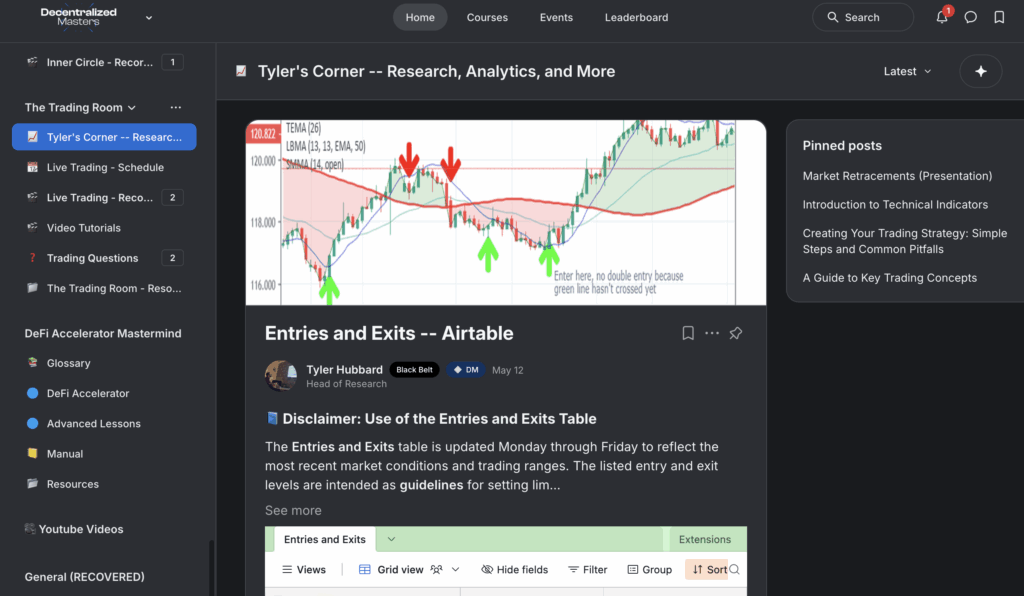
Decentralized Masters positions itself as an education-first platform for people who want to understand DeFi and self-custody without relying on centralized intermediaries. Their content tends to revolve around core DeFi mechanics (wallets, on-chain activity, liquidity, swaps, risk management) and how early-stage “native markets” can differ from buying established coins on major exchanges.
Prefer the “foundations” training? Their opt-in focuses on the “be your own bank” concept and self-custody basics.
Services and What You Typically Get
| Company Name | Decentralized Masters |
| Core focus | DeFi education, research-style market commentary, community, and optional mentorship |
| Format | Training modules + live sessions + community + optional 1-on-1 calls |
| Pricing | Varies by tier (usually discussed after a call, not posted as a simple price list) |
| Who it helps most | People who want structure and guardrails before touching DeFi tools |
Native Markets vs. Mainstream Exchanges
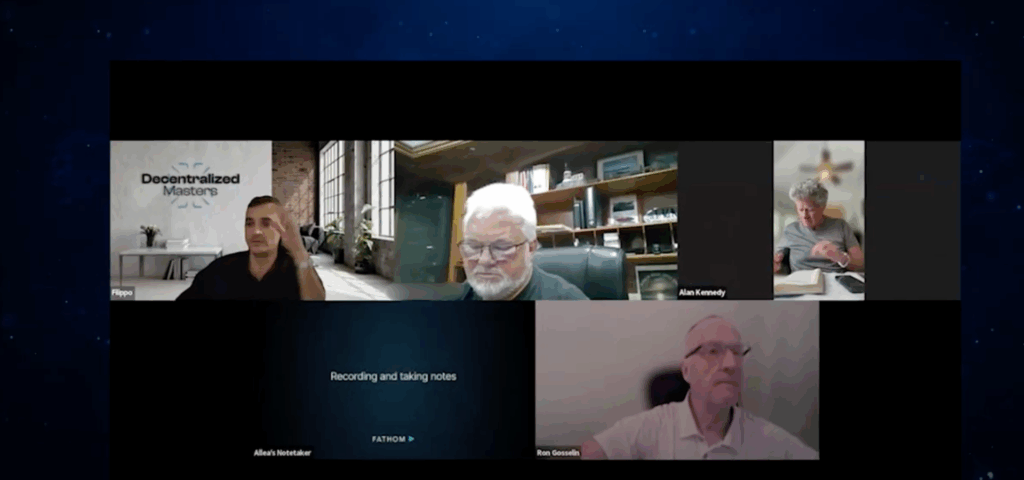
One recurring concept in DeFi education is that “native markets” (often decentralized exchanges and on-chain liquidity venues) can expose you to new tokens and protocols earlier than mainstream platforms. Mainstream exchanges (Coinbase, Kraken, etc.) are usually easier for beginners, but many assets only show up there after they’re already well known. Early access can increase upside potential, but it also increases risk, scams, volatility, and the chance of making a costly mistake.
| Category | Native Markets | Mainstream Exchanges |
|---|---|---|
| When assets appear | Often earlier | Often later |
| Ease of use | More technical | Beginner-friendly |
| Risk profile | Higher (more scams, volatility, smart contract risk) | Lower (but still risky) |
| Examples | DEXs and on-chain venues | Coinbase, Kraken, etc. |
| Best use case | Exploring earlier-stage opportunities (only if you understand the risks) | Buying established assets with simpler UX |
Tokenized gold (quick note): Decentralized Masters also teaches members about tokenized real-world assets, including tokenized gold, which generally refers to gold-linked tokens that aim to represent ownership or exposure to vaulted bullion while keeping the transferability of crypto. The pitch is convenience (faster liquidity, fractional sizing, easier portability), and some DeFi platforms may allow you to use gold-linked tokens in lending or liquidity strategies, but any yield is variable and comes with additional risks (smart contracts, counterparty exposure, market stress events), so it should be approached with the same caution as any other DeFi strategy. Learn more about tokenized gold training here.
Products and Pricing (What to Expect)
Decentralized Masters does not always display a simple public price list. In many cases, you’ll see an invite to start with a free training/kit and then book a call to discuss fit and options. If you’re considering joining, I’d treat it like hiring a coach: ask what’s included, what support looks like, and what the expected time commitment is per week.
Do We Recommend Decentralized Masters?
For the right person, yes. If you are curious about DeFi but you know you’ll procrastinate or make mistakes without structure, this kind of guided education can be worth it. If you are looking for guaranteed returns or you’re not comfortable with crypto risk at all, you should probably pass.
- Good fit: You want a structured curriculum, you’ll actually follow it, and you’re willing to learn risk management.
- Not a fit: You want “signals” without learning, or you’re not willing to use self-custody and basic DeFi tools safely.
If you want to talk to someone directly, this is their direct application link.
Decentralized Masters Contact Information
- Email: support@decentralizedmasters.com
- Website: https://www.decen-masters.com/
- LinkedIn: https://www.linkedin.com/company/decentralized-masters/
- Facebook: https://www.facebook.com/DecentralizedMasters/
- Instagram: https://www.instagram.com/decen_masters/
- YouTube: https://www.youtube.com/@decentralized_masters/
- Founder LinkedIn: https://www.linkedin.com/in/tan-gera-cfa/
Decentralized Masters FAQ
What is Decentralized Masters?
Decentralized Masters is a DeFi education and mentorship platform that teaches people how decentralized finance works, with an emphasis on self-custody, risk management, and understanding “native markets.” The goal is to help members learn the mechanics first, then decide if and how they want to participate.
Is Decentralized Masters legit, or is it a scam?
It’s a real company with a public footprint (reviews, social profiles, support email, and a visible team presence). That said, DeFi itself is risky, and no education program can remove market risk, smart contract risk, or user-error risk. The best way to judge legitimacy is to read both positive and negative reviews, then compare the complaints to what you personally can tolerate.
Is Decentralized Masters a financial advisor?
No. Decentralized Masters is primarily an education and mentorship platform, not a fiduciary financial advisor. You’re still responsible for your decisions, position sizing, custody practices, and tax reporting. If you want personalized advice for your full financial situation, speak with a qualified professional.
What are “native markets” in DeFi?
“Native markets” generally refers to where activity happens on-chain (often via decentralized exchanges and protocols) before assets or opportunities show up on mainstream platforms. This can mean earlier access, but it also usually means higher complexity and higher risk.
- Potential upside: earlier access + more flexibility
- Main risks: scams, rug pulls, smart contract exploits, extreme volatility, user mistakes
Do I need to be technical to learn DeFi?
You don’t need to be a programmer, but you do need patience and attention to detail. Most beginners struggle with wallet hygiene, transaction confirmations, and understanding fees/approvals. A good learning path should make the basics repeatable before you ever increase size.
- Start small while you learn the process
- Never rush a transaction
- Write down steps and build a repeatable checklist
What does “Become Your Own Bank” mean here?
In this context, it usually means using self-custody and DeFi tools so you’re not fully dependent on a traditional bank or a centralized exchange for access, transfers, or certain financial functions. That comes with more control, but also more personal responsibility (security, backups, and risk management).
If you want their intro training on this concept: Become Your Own Bank (Opt-in).
What do you actually get as a member?
Most programs like this typically include a structured curriculum, live sessions, community access, and optional guidance. The “real” value (if it’s a good fit) is usually clarity + guardrails so you don’t learn the hard way in public markets.
- Step-by-step training (from basics to more advanced concepts)
- Frameworks for risk management and position sizing
- Community for Q&A and accountability
- Optional calls or mentorship (depending on tier)
How much does Decentralized Masters cost?
Pricing is usually discussed after you review the training and speak with the team, because different tiers can include different levels of mentorship. If you’re comparing options, ask these questions directly on a call:
- What’s included at each tier (and what is not)?
- How long do you keep access?
- What does mentorship look like in practice (frequency, format, limits)?
- Is there a refund window or cancellation policy?
Do I really need $10,000 to start DeFi?
No one “needs” a specific number to learn, but having more capital can make certain strategies practical. For a true beginner, the smarter approach is usually:
- Learn first with tiny amounts to practice wallets and transactions
- Scale gradually only when you can repeat the process safely
- Never risk money you can’t afford to lose
DeFi fees, volatility, and mistakes can be expensive, so “more capital” should never mean “more reckless.”
What is the Free Strategy Kit and who is it for?
The Free Strategy Kit is typically the lowest-friction way to understand their approach before you commit to anything. It’s best for beginners who want a structured overview and for experienced investors who want to compare frameworks.
Here’s the kit link: Get the Free Strategy Kit.
What is tokenized gold, and why do DeFi investors care?
Tokenized gold generally refers to gold-linked tokens designed to represent exposure to vaulted bullion while keeping the portability and 24/7 transferability of crypto. Some DeFi users like it because it can combine a “gold-style” store-of-value narrative with on-chain utility, but it also introduces extra layers of risk (protocol risk, counterparty risk, liquidity conditions).
If you want their tokenized gold training specifically: Learn about tokenized gold strategies.
What are the biggest risks with DeFi (even with education)?
The biggest DeFi risks are smart contract exploits, scams, extreme volatility, liquidity events, and user error (wrong address, wrong network, bad approvals). Education helps reduce mistakes, but it cannot eliminate risk.
- Only use reputable wallets and follow security best practices
- Double-check contract addresses and networks
- Keep position sizes sane and avoid “all-in” behavior
- Treat “guaranteed yield” claims as a red flag
What results can I realistically expect?
The most realistic “win” is not a specific return number — it’s competence: understanding self-custody, reading risk, avoiding obvious traps, and building a repeatable process. Some members pursue higher-risk strategies, but outcomes vary widely based on markets, discipline, and risk tolerance.
Translation: if your goal is “guaranteed income,” DeFi is the wrong place. If your goal is “learn how this world works safely,” a structured program can help.
How much time per week does DeFi education take?
If you want real progress, plan for 2–5 hours per week initially (learning + setup + practice). If you’re implementing strategies, it can take more time, especially during volatile markets. Rushing is how beginners make expensive mistakes.
What about taxes and tracking transactions?
Crypto taxes can get complicated fast because on-chain activity may create multiple reportable events depending on your jurisdiction. If you participate in DeFi, assume you’ll need good record-keeping and potentially a tax professional familiar with crypto reporting.
- Track deposits, swaps, bridging, and withdrawals
- Keep wallet notes and transaction hashes organized
- Don’t wait until tax season to “figure it out”
Is there a refund or cancellation policy?
Policies can vary by offer and tier, so don’t guess. If you’re considering joining, ask for the current refund/cancellation terms in writing before paying. A legitimate program should be clear about billing cadence, access duration, and cancellation steps.
Who is Decentralized Masters best for (and who should avoid it)?
Best for: people who want structure, want to learn self-custody safely, and prefer guided implementation over random internet tactics.
Not ideal for: anyone looking for guaranteed returns, anyone uncomfortable with crypto risk, or anyone who won’t follow a process (security + discipline matters more than hype).
What’s the fastest next step if I’m interested?
Start with the free kit, then decide if a call makes sense based on your goals and risk tolerance.


 Gold: $4,172.10
 Silver: $61.38
 Platinum: $1,704.62
 Palladium: $1,225.18
 Bitcoin: $83,681.47
 Ethereum: $2,677.82