
 Gold IRA
 Silver
 Gold
Gold Platinum
 Palladium
 Bitcoin
 Ethereum
 Gold Calculators
 Questions? Call (626) 605-3152
What is 18K Gold Worth Per Gram?
Disclosure: We are reader-supported. If you purchase from a link on our site, we may earn a commission. Learn more
Last Updated on: 22nd September 2026, 09:53 pm
Jewelry collectors and precious metals aficionados alike often wonder what their high-purity gold items are worth. 18 karat gold, or “18K gold,” is no exception.
For example, a pound of gold is worth dramatically more today than it was just a couple of years ago. A gold quarter, meanwhile, has a very different value profile because coins and jewelry are priced differently. In my experience, this is where many readers get tripped up. They see a headline gold price, then assume every gold item should trade at that exact rate. Real life is a bit messier than that.
Get Noble Gold’s Free 2026 Gold Investor’s Guide
If you want to learn how investment-grade gold differs from jewelry gold, this free guide is a solid starting point.
Request the Free GuideHowever, karat gold is different. Since jewelry is made with varied fineness and alloy mixes, it is not always easy to tell exactly how much smeltable gold is contained in a given piece of jewelry just by looking at it.
Now, let’s take a closer look at the value of 18K gold and its price per gram. Once you understand the math, it becomes much easier to make smarter buying, valuing, or selling decisions.
Table of Contents
The Basics of 18K Gold
18K gold is a popular choice for jewelry because it strikes a sweet spot between purity, appearance, and durability. The “K” stands for karat, which is a measure of gold purity.
In the case of 18K gold, the piece is made of 75% pure gold and 25% other metals such as copper, silver, nickel, or palladium. Those added metals improve strength and can also influence the color of the finished item, whether yellow, white, or rose gold. The World Gold Council explains this carat system clearly, and the Royal Canadian Mint also notes that 18K gold is commonly marked as “750,” meaning 750 parts per 1,000 are pure gold.
That is one reason 18K gold remains so popular. It is purer than 14K or 10K gold, but it is tougher and more practical for daily wear than 24K gold, which is much softer. If you want a deeper dive into high-purity gold itself, take a look at our guide to 24K gold.
Common 18K gold items include:
- Engagement and wedding rings
- Fine jewelry
- Luxury watches
- Designer pieces where appearance and longevity both matter
One thing I have noticed over the years is that people often overfocus on karat and underfocus on weight. Purity matters, of course, but the actual gram weight of the item is what really starts to move the valuation needle.
Determining the Value of 18K Gold: Price Per Gram
The easiest way to estimate the value of 18K gold is to work from the current spot price of pure gold and then adjust for 18K purity. If you want to monitor the live market first, check our gold price page.
Here is the basic process:
- Convert the gold price from per troy ounce to per gram.
- Multiply that number by 0.75, since 18K gold is 75% pure.
For reference:
- 1 troy ounce = 31.1035 grams
Using a spot-gold example of $4,370.24 per troy ounce (the price as I write this in late September 2026), the math looks like this:
- $4,370.24 ÷ 31.1035 = about $140.51 per gram of pure gold
- $140.51 × 0.75 = about $105.38 per gram of 18K gold
So, based on that market example, 18K gold is worth about $105.38 per gram before any dealer spread, manufacturing premium, brand markup, or resale discount is applied.
As a quick rule of thumb, you can estimate 18K gold by taking the live price of pure gold per gram and multiplying it by 0.75. If you want to play with more examples, our gold calculators page can help you sanity-check the numbers.
| 18K Gold Weight | Approximate Melt Value |
|---|---|
| 1 gram | $105.38 |
| 5 grams | $526.90 |
| 10 grams | $1,053.80 |
| 20 grams | $2,107.60 |
| 1 troy ounce | $3,277.68 |
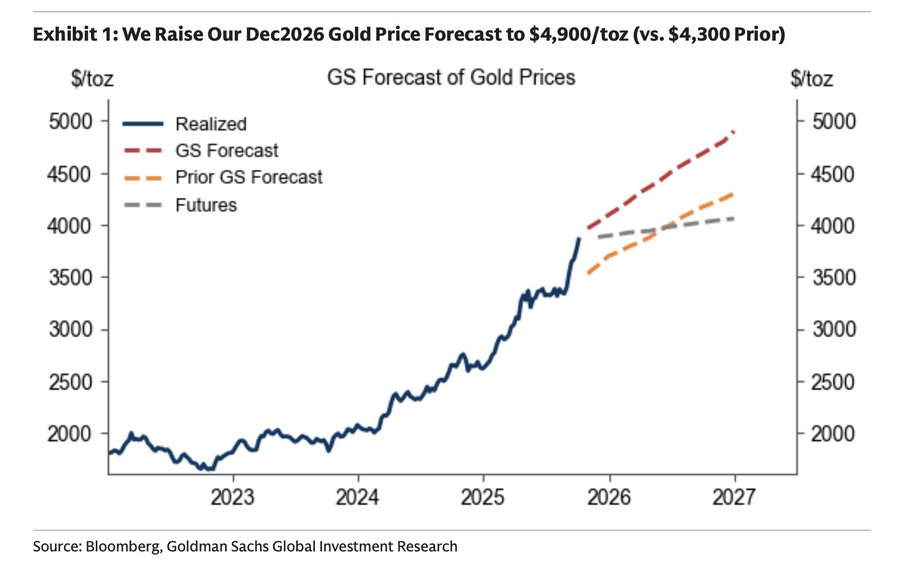
Goldman Sachs has increased its forecast for end of 2026. Note that Gold prices can move quickly. Check the live spot price of goldbefore estimating what 18K gold is worth per gram today.
Why Your 18K Gold May Sell for More or Less Than Melt Value
The melt value is a useful baseline, but it is not always the same as the amount you will actually receive when selling. In practice, I usually tell readers to think in terms of value layers:
- Melt value: the raw gold content based on weight and purity
- Retail value: what a consumer might pay for the item new or used
- Resale payout: what a jeweler, pawn shop, or gold buyer may actually offer
That gap can be surprisingly wide. A branded 18K watch or designer ring may sell above melt value because of brand recognition and craftsmanship. On the other hand, a broken chain may be priced almost entirely on scrap value. If you plan to sell, our guide to selling gold and silver is worth reading first.
Factors Influencing 18K Gold Prices
Several variables can push the price of 18K gold up or down:
1. Spot Gold Prices: This is the main driver. If the price of pure gold rises, 18K gold rises with it.
2. Currency Movements: Gold is generally priced in U.S. dollars, so exchange-rate shifts can affect valuation.
3. Jewelry Demand: Consumer demand for jewelry can affect premiums, especially in strong seasonal buying periods.
4. Dealer Margins: Different buyers apply different spreads and payout formulas.
5. Item Condition and Brand: Branded or especially attractive pieces can carry value beyond melt.
6. Authenticity Concerns: If there is any doubt about whether the piece is genuine, expect a lower offer until it is tested. If that is a concern, our article on real gold vs fool’s gold and our guide on gold density can help you understand basic verification concepts.
Want the bigger-picture gold guide?
Jewelry value is one thing. Investment-grade bullion is another. Noble Gold’s free 2026 guide walks through the basics in plain English.
Get the Free 2026 Guide18K Gold vs. 24K Gold vs. IRA-Eligible Bullion
This is where context matters. 18K gold is excellent for jewelry, but it is not the same as investment-grade bullion. In fact, most Gold IRA bullion products must meet much stricter purity rules. The IRS has long imposed rules around eligible precious metals held in retirement accounts, and that is one reason most IRA bullion products are .995 fine or better, with limited exceptions for certain coins. You can review the IRS background here.
So while 18K jewelry can absolutely hold real intrinsic value, it usually belongs in the “personal asset” or “resale jewelry” bucket, not the “IRA-eligible bullion” bucket. If you are comparing those categories, see our pages on what a Gold IRA is and physical gold vs. paper gold.
How I Would Value an 18K Gold Item Today
If I were valuing a piece of 18K gold today, I would use a simple checklist:
- Confirm the hallmark, usually 18K or 750
- Weigh the item precisely in grams
- Check the current live gold price
- Calculate the melt value using 75% purity
- Compare offers from at least two or three buyers
- Consider whether the item has brand, antique, or collectible value beyond melt
That last point matters more than many people think. A plain 18K bracelet and a signed 18K Cartier piece may contain similar gold, but they do not live in the same resale universe.
Value 18K Gold the Right Way
18K gold can be quite valuable, but the real key is understanding what kind of value you are measuring. Melt value gives you a clean baseline. Resale value depends on the real world, meaning condition, craftsmanship, brand, demand, and who is making the offer.
If you would rather deal face to face, a reputable local coin shop can quote your 18K items on the spot. Our state-by-state gold dealer directory lists vetted shops across the country, ranked by their third-party ratings.
If all you want is a fast estimate, the formula is easy: take the live gold price per gram and multiply it by 0.75. If you want the true market value of a specific piece, though, you need to go a step further and consider the human side of the transaction too. In my experience, that is the part people overlook most often.
18K Gold FAQ
How much is 18K gold worth per gram right now?
Is 18K gold the same as 750 gold?
Why do buyers offer less than the calculated 18K melt value?
Is 18K gold a good choice for jewelry?
Can 18K gold go into a Gold IRA?
What is the fastest way to estimate the value of an 18K gold ring?
What is the difference between 18K gold value and retail jewelry price?


 Gold: $4,194.48
 Silver: $60.81
 Platinum: $1,690.89
 Palladium: $1,149.70
 Bitcoin: $82,815.05
 Ethereum: $2,495.55