
 Gold IRA
 Silver
 Gold
Gold Platinum
 Palladium
 Bitcoin
 Ethereum
 Gold Calculators
 Questions? Call (626) 605-3152
What is a Proof Coin? Are They a Good Investment in 2026?
Disclosure: We are reader-supported. If you purchase from a link on our site, we may earn a commission. Learn more
Last Updated on: 23rd February 2026, 05:06 pm
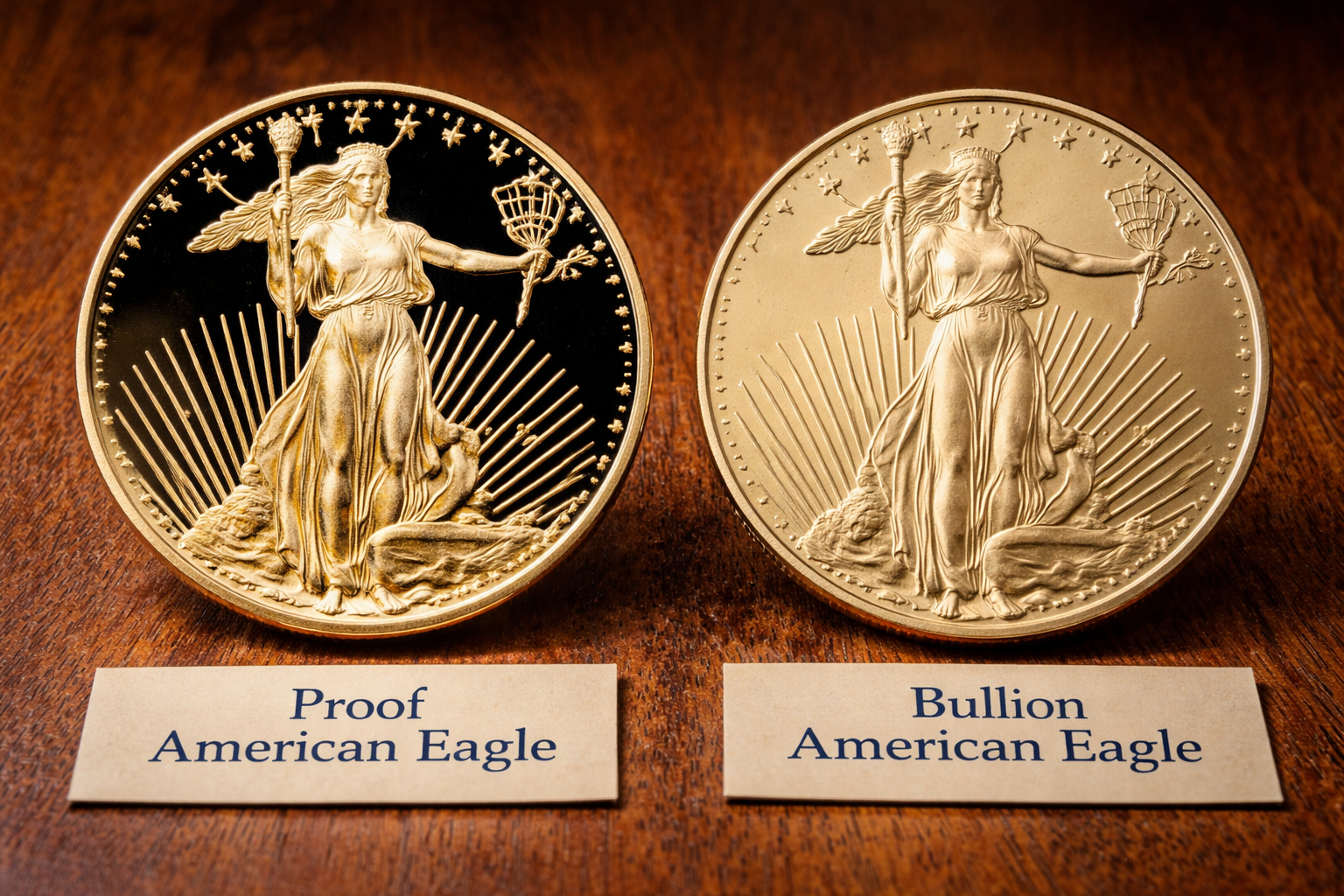
Proof coins are the “showroom finish” version of a coin. They look stunning, but they also come at a higher cost! Proof coins are struck with extra care using specially prepared dies and planchets, which is why you usually see mirror-like fields (backgrounds) and frosted details (devices). They look amazing. The big question for investors in 2026 is whether that beauty translates into better returns, or whether it mostly translates into higher premiums and slower resale.
Quick take for 2026: Proof coins can be a smart buy if you truly want the collectible experience and you’re selective (right coin, right price, right liquidity plan). If you’re primarily stacking metal for value, standard bullion coins are usually the cleaner investment because premiums are lower and resale is simpler.
Jump to:
What is a proof coin? · Proof vs bullion vs uncirculated · How proof coins are priced in 2026 · Are proof coins a good investment in 2026? · Proof coins and IRAs · How to buy proof coins smart · FAQ
Table of Contents
- What is a proof coin?
- Proof vs. bullion vs. uncirculated (and why people confuse them)
- How proof coins are priced in 2026 (and what actually moves the needle)
- Are proof coins a good investment in 2026?
- Proof coins and IRAs (important nuance)
- How to buy proof coins smart (my checklist)
- Common proof coin examples investors ask about
- FAQ
- Bottom line
What is a proof coin?
A proof coin is a coin made primarily for collectors, not for circulation. It’s struck with higher-quality preparation and tighter quality control so the final coin has sharper detail and a more dramatic finish. The U.S. Mint describes proof coins as having sharp relief with mirror-like backgrounds and frosted foregrounds that create a cameo effect. PCGS similarly notes proofs are struck from specially prepared dies and planchets, often with more than one strike, resulting in sharper detail and a premium finish.
If you want a simple mental image: bullion is built for volume, proof is built for presentation.
Helpful references:
U.S. Mint proof sets overview
PCGS: proof vs prooflike
Proof vs. bullion vs. uncirculated (and why people confuse them)
| Type | What it’s made for | Typical look | Typical premium | Resale reality |
|---|---|---|---|---|
| Proof | Collector presentation | Mirror fields, frosted devices, strong cameo | Higher | You often sell based on collector demand, not just metal value |
| Bullion | Metal exposure and liquidity | Standard “business strike” finish | Lower | Most straightforward: buy/sell close to spot + premium |
| Uncirculated | Collector product (often) | Satin or enhanced finish, not mirror-proof | Medium | Can be easier than proofs, but still premium-dependent |
| Numismatic / rare | Collector rarity and scarcity | Varies | Can be very high | Requires knowledge, grading literacy, and good buy prices |
If you want a deeper refresher, I wrote this in a way that’s investor-friendly: Proof vs. uncirculated vs. bullion coins (Gold IRA Guide).
How proof coins are priced in 2026 (and what actually moves the needle)
The biggest “investment” difference between proof and bullion is the premium. Bullion buyers mostly care about metal content and liquidity. Proof buyers pay for:
- Finish and quality control (mirror fields, frosted devices, fewer marks).
- Packaging and COA (presentation cases, certificates, box and papers).
- Collector demand (certain series, certain years, special labels).
- Grading outcomes (PF69 vs PF70 spreads can be huge).
- Dealer “story premium” (marketing around rarity, “exclusive releases”, “limited edition”).
2026 reality check: Many modern proof releases are limited but not always rare. A coin can have a capped mintage and still be common if demand fades or if a huge share gets graded and sits in the market.
Are proof coins a good investment in 2026?
The “yes” case 👍
- You can buy close to melt + a reasonable premium (this happens more often on the secondary market than directly from a mint).
- You’re buying a series with durable collector demand (long-running flagships with consistent buyers).
- You understand grading risk, or you buy already-graded examples at sensible spreads.
- You value the collecting experience (owning the “best-looking” version of a coin is a real benefit, just not always a financial one).
The “no” case 👎
- You are paying a big launch premium because it feels “exclusive” in the moment.
- You expect proof coins to track spot like bullion. They don’t. Premiums expand and compress based on collector sentiment.
- You might need quick liquidity. Bullion is easier to price and sell.
- You’re being pushed into high-markup “premium” products when your goal is simply metal exposure.
If your main goal is “best bang for your buck gold exposure,” start here instead and build from that foundation: Top gold coins to buy for investors.
Proof coins and IRAs (important nuance)
A lot of investors mix up “proof” with “IRA-approved.” The IRS generally treats coins and metals as collectibles, with an exception for certain bullion that meets purity rules and is held by an approved trustee. That is why IRA eligibility depends on the specific coin, its purity, and how it’s held, not just whether it is proof or bullion.
If you are considering proofs inside a retirement account, do not assume they are allowed. Confirm with your custodian, and stick to widely recognized IRA-eligible products unless you have a very specific reason to do otherwise.
Helpful reading:
IRS: IRAs and collectibles (FAQ)
How a self-directed IRA invests in metals
Example IRA-eligible coin page (American Eagle Platinum)
How to buy proof coins smart (my checklist)
- Decide your goal first: metal exposure, collecting joy, gifting, or long-term numismatic upside. Proof coins are rarely the best “pure metal” tool.
- Know the spread before you buy: ask, “If I needed to sell this next week, what would a realistic dealer offer be?”
- Be careful with PF70 hype: PF70 can command a big premium, but that premium can shrink fast if the market gets saturated.
- Buy the coin, not the marketing: “limited edition” is not the same thing as “rare.”
- Protect condition: handle proof coins like you’d handle a camera lens. Avoid fingerprints, humidity, and careless storage. If you store metals at home, this is a good starting point: how to store gold safely.
Where most people go wrong: They buy proof coins at peak excitement and then try to sell them like bullion. If you want bullion behavior, buy bullion.
Common proof coin examples investors ask about
- Proof American Eagle (Gold or Silver): iconic series, easy to recognize, premiums vary widely by year and packaging.
- Proof Maple Leaf: often gorgeous finishes, strong brand recognition, but still premium-driven.
- Proof sets: fun collector entry point, usually not the best “investment” choice unless you buy them well below typical retail.
If you’re newer to the bigger picture of metals as a portfolio tool, I’d read this first and then circle back to proofs: Complete Gold IRA Guide.
FAQ
Are proof coins “real money”?
Do proof coins always have higher value than bullion?
What do PF and PR mean on graded proof coins?
Is PF70 worth it in 2026?
Are proof coins a good “starter” buy?
Where should I buy proof coins?
Bottom line
In 2026, proof coins are best treated as a collector-first purchase with possible investment upside, not a default “better” version of bullion. If you love the artistry, buy proofs. If you love clean exposure to precious metals, buy bullion. And if you’re mixing metals with retirement planning, make sure you understand the rules and custody requirements before you buy anything.
Disclosure: This article is for educational purposes only and is not financial or tax advice. Consider talking with a qualified financial professional or tax advisor about your specific situation.


 Gold: $4,022.04
 Silver: $54.54
 Platinum: $1,568.08
 Palladium: $1,053.85
 Bitcoin: $81,186.87
 Ethereum: $2,376.82