
 Gold IRA
 Silver
 Gold
Gold Platinum
 Palladium
 Bitcoin
 Ethereum
 Gold Calculators
 Questions? Call (626) 605-3152
Top 7 Best Gold Coins to Buy for Investors
Disclosure: We are reader-supported. If you purchase from a link on our site, we may earn a commission. Learn more
Last Updated on: 23rd February 2026, 03:54 pm
In an earlier post, we covered the Top 7 Gold Bars for Investors. In a similar vein, today we are going to identify 7 of the best gold bullion coins to consider as an investor. And since this is a Gold IRA website, we will focus on coins that are commonly used in precious metals IRA strategies, while also highlighting a key point many people miss:
Important: “IRA-eligible” is ultimately determined by the IRS rules under the collectibles restrictions and the exceptions for certain coins and bullion that meet specific requirements. In practice, your custodian (and their metals dealer network) will confirm which products they will accept for deposit, and the metals must be held with an approved trustee or depository. The IRS overview is a good starting point: Investments in collectibles (IRS guidance).
Generally speaking, IRA-eligible gold bullion is often associated with a minimum fineness of .995 (99.5%) when held as bullion, but there are notable exceptions for certain U.S. Mint coins that the tax code treats differently. For example, the American Gold Eagle is widely used in IRAs even though it is 22k (.9167 fine), because it still contains a full troy ounce of gold and falls under the “certain coins” category commonly referenced in IRA guidance.
A quick primer: there are two main ways people add physical gold exposure to a precious metals IRA: gold coins or gold bars. There are real differences between coins and bars (premiums, divisibility, recognizability, and resale convenience), but in both cases you are making a decision to hold gold as an alternative to paper currencies as part of a broader strategy.
Here is our list of 7 top gold bullion coins investors commonly consider (in no particular order):
Table of Contents
Austrian Philharmonic Gold Coins

- Purity: 99.99% (24 karat)
- Weight: 1 oz (also available in smaller sizes)
- Mint: Austrian Mint
The Austrian Philharmonic is a flagship European bullion coin with strong recognition. Its iconic musical design, brand familiarity, and consistent quality are the reasons it sits comfortably on this list.
While these particular bullion coins have only been minted since 1989, the Austrian Mint has a long minting history and the modern Philharmonic is struck in 99.99% pure gold. These coins are widely traded internationally, which is a plus if you value recognizability when it comes time to sell.
For official mint background, you can also see the Austrian Mint’s product info here: Austrian Mint: Philharmonic.
American Eagle Gold Coins
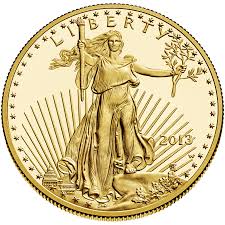
- Purity: 91.67% (22 karat)
- Weight: 1 oz (also available in 1/2 oz, 1/4 oz, and 1/10 oz)
- Mint: United States Mint
The official gold bullion coin of the United States, the American Gold Eagle is 22k gold (an alloy), which makes it tougher than many 24k coins. It’s one of the most widely recognized bullion products on the planet, and you can usually find it at most reputable gold dealers.
One nuance that confuses investors: the coin is .9167 fine, which is below the “.995 bullion” fineness commonly cited for gold bullion. However, Gold Eagles are widely treated as IRA-acceptable under the “certain coins” exception framework referenced in IRA guidance, and each 1 oz coin still contains one full troy ounce of gold (the coin’s total weight is higher because of the alloy).
If you want a primary source on the coin itself, the U.S. Mint’s overview is here: U.S. Mint: American Gold Eagle bullion.
Canadian Maple Leaf Gold Coins
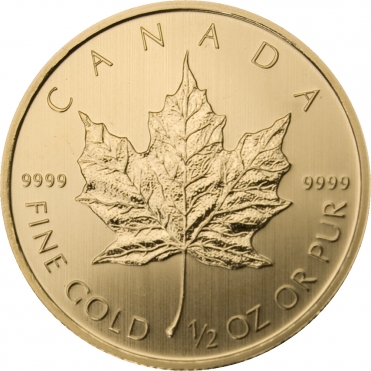
- Purity: 99.99% (24 karat)
- Weight: 1 oz (also available in smaller denominations)
- Mint: Royal Canadian Mint
The Canadian Gold Maple Leaf is one of the most recognizable modern gold bullion coins in the world. For many investors, it’s the “clean and simple” choice: high purity, strong global recognition, and easy pricing.
The Royal Canadian Mint has also issued special high-purity editions over the years (including ultra-high fineness collector pieces), but the standard 1 oz Maple Leaf bullion coin is most often what investors mean when they say “Maple Leaf.” For official specs and security features, see: Royal Canadian Mint: Gold Maple Leaf bullion.
2026 cleanup note: You may see claims online that “all Maple Leafs must be sourced from Canadian mines.” The Mint does emphasize responsible sourcing and has also issued products tied to specific sourcing programs, but it is better to avoid absolute claims like that unless you are referencing a specific program or edition.
Australian Kangaroo Gold Coins
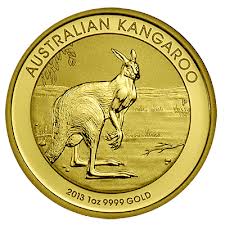
- Purity: 99.99% (24 karat)
- Weight: 1 oz (also available in various sizes)
- Mint: Perth Mint
Originally called the “Gold Nuggets” because early designs featured gold ore, Australian Gold Kangaroos are now known for their annual design changes. This makes them popular with investors who also enjoy the collector aspect, while still keeping the product firmly in the bullion category for most buyers.
These coins are struck by the Perth Mint, and they remain among the best-known Australian bullion products globally. Official product info is here: Perth Mint: Kangaroo bullion coins.
American Buffalo Gold Coins
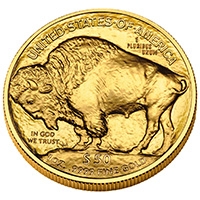
The “Gold Buffalo” is the only major 24K U.S. gold bullion coin series and is a favorite for investors who want U.S. recognition without the 22k alloy used in Gold Eagles. It is struck in .9999 fine gold and is a highly liquid modern bullion coin.
2026 correction: Even when sold as “bullion” or in “uncirculated/burnished” formats, the American Buffalo is still a legal tender U.S. coin with a face value (commonly $50 for the 1 oz coin). “Uncirculated” describes the finish and how it’s marketed, not whether it has a face value.
If you want a basic specs reference, the U.S. Mint overview is here: U.S. Mint: American Buffalo.
The British Gold Britannia
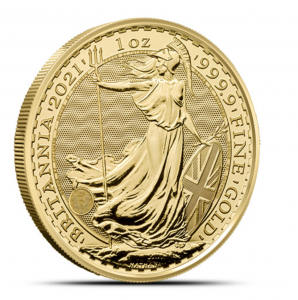
- Purity: 99.99% (24 karat)
- Weight: 1 oz (also available in smaller sizes)
- Mint: The Royal Mint (UK)
The British Gold Britannia, minted by The Royal Mint, is a widely recognized modern bullion coin that has become increasingly popular with both U.S. and international buyers. Newer Britannia issues are also known for adding modern security features, which can be a nice bonus for investors who care about authenticity and resale confidence.
For official specs and the Mint’s own product overview, see: The Royal Mint: Gold Britannia bullion.
The Chinese Gold Panda
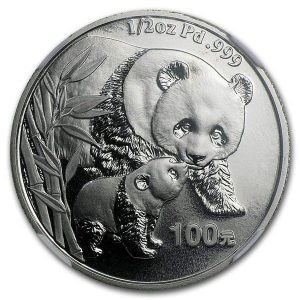
- Purity: 99.9% (24 karat)
- Weight: 30 grams (standard since 2016)
- Mint: People’s Republic of China
The Chinese Gold Panda is one of the most recognizable modern bullion coins outside North America and Europe, and it is known for annual design changes that feature the panda. Because it is issued in metric weights (30g for the standard coin), U.S. investors sometimes overlook it, but collectors and international buyers often love it.
IRA note: rules and custodian acceptance can be more variable with some foreign coins. If your goal is specifically a metals IRA deposit, confirm acceptance with your custodian before buying. For most IRA buyers, it’s usually simplest to stick to the most commonly accepted, widely traded products first.
Why Invest in Gold Coins?
So why would you choose to own gold coins instead of gold bars? Aside from the fact that coins are more visually interesting than bars, there are a couple of practical reasons investors often prefer them:
- Recognizability: bullion coins are widely recognized and easy to authenticate, which can help during resale.
- Divisibility: coins come in fractional sizes more commonly than bars, giving you more flexibility if you ever want to sell a portion of your holdings.
- Liquidity: popular bullion coins often trade with tight spreads compared to less common products, especially during high-demand periods.
If you want to go deeper on choosing coins vs bars, start here: investing in gold (beginner-friendly overview).
Disclosure: This article is for educational purposes only and is not financial, legal, or tax advice. IRA rules can be nuanced and custodian policies vary. Always confirm eligibility and deposit requirements with your IRA custodian and a qualified professional.
Collector coins are not the cheapest way to own gold or silver. Proof, numismatic and limited-edition coins look beautiful and can be a lovely addition to a collection or a thoughtful gift. As investments, though, they usually carry much higher premiums than standard bullion, commonly 15% to 30% or more over the value of the metal, compared with a few percent for common bullion coins and bars. That extra cost is hard to earn back when you sell.
Nothing on this page is financial advice. Speak to your financial advisor and do your own due diligence before investing in precious metals.
FAQ: Proof Coins, Bullion Coins, and IRA Eligibility (2026)
These are the most common questions readers ask (and the same questions voice assistants and AI overviews tend to pull from) when researching proof coins vs bullion, best gold coins to buy, and IRA-approved gold coins.
What is a proof coin?
What is a bullion coin?
Are proof coins a good investment in 2026?
Do proof coins go up in value more than bullion coins?
What does “PF70” or “PR70” mean?
Is a proof coin “pure gold”?
What are the best gold bullion coins for investors in 2026?
What is the difference between American Gold Eagle and American Gold Buffalo?
Are gold proof coins IRA-approved?
What gold purity is required for a Gold IRA?
Are collectible coins allowed in a Gold IRA?
Should I buy proof coins or bullion coins if my main goal is protecting savings?
Why do proof coins cost so much more?
How can I avoid overpaying for gold coins?
What’s the safest way to store proof coins at home?


 Gold: $3,995.86
 Silver: $53.87
 Platinum: $1,553.39
 Palladium: $1,044.17
 Bitcoin: $79,968.05
 Ethereum: $2,323.58