
 Gold IRA

 Silver
 Gold
 Platinum
 Palladium
 Bitcoin
 Ethereum
 Gold Calculators
 Questions? Call (626) 605-3152
Krugerrand Value Today (2026): Gold Content, Price, Sizes and History
Disclosure: We are reader-supported. If you purchase from a link on our site, we may earn a commission. Learn more
The first gold coin I ever bought was a 1 oz Krugerrand from a small coin shop, back when gold was still under $400 an ounce. More than twenty years of writing about precious metals later, it is still the coin I point people to when they ask for the simplest, most recognizable way to hold an ounce of gold. The Krugerrand was the world's first modern gold bullion coin, it contains exactly one troy ounce of pure gold, and its value moves almost entirely with the gold price. Here is what one is worth today, how it compares with the Gold Eagle and Maple Leaf, and the few things that trip up first-time buyers.
Quick Answer: How Much Is a Krugerrand Worth?
A 1 oz gold Krugerrand holds 1.0000 troy ounce of fine gold, so its melt value equals the gold spot price: about $4,050 at the current price of $4,050 an ounce. Dealers usually sell common-date Krugerrands for a few percent over spot and buy them back slightly under it. Proof and rare-date coins can sell for more.
| Size | Fine gold | Gross weight | Melt value now |
|---|---|---|---|
| 1 oz Krugerrand | 1.0000 oz | 33.93 g | $4,050 |
| 1/2 oz Krugerrand | 0.5000 oz | 16.97 g | $2,025 |
| 1/4 oz Krugerrand | 0.2500 oz | 8.48 g | $1,013 |
| 1/10 oz Krugerrand | 0.1000 oz | 3.39 g | $405 |
Melt values update with the live gold price. They are the value of the gold only, before any dealer premium or spread.
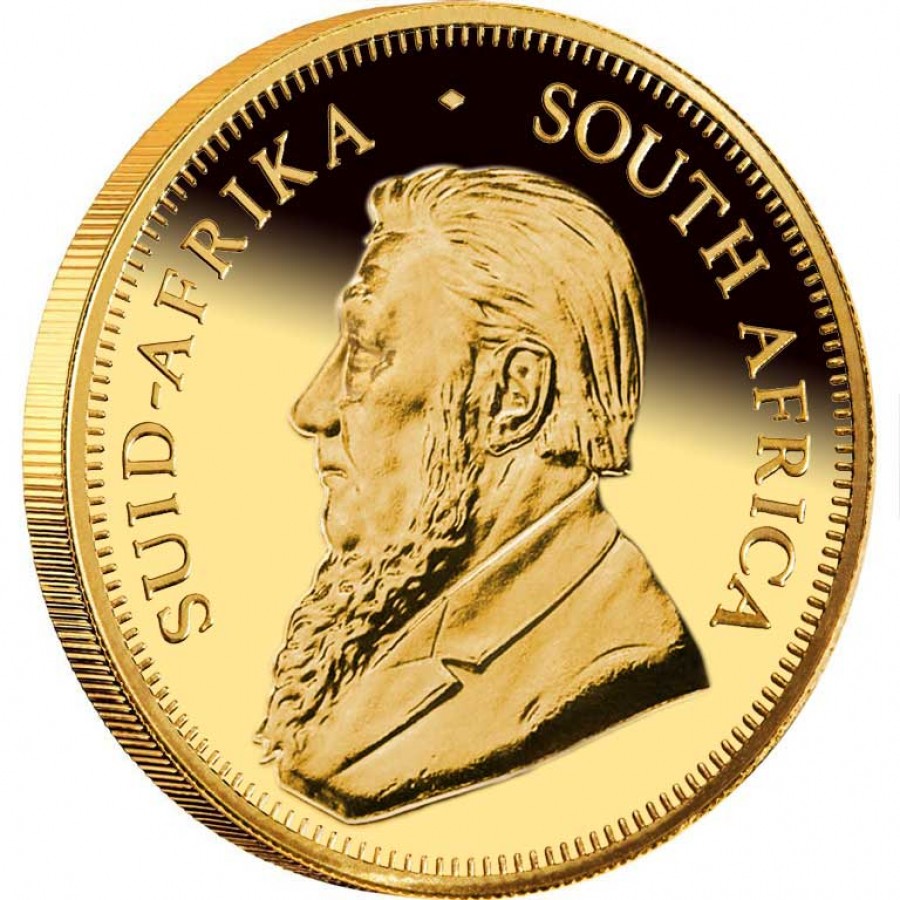
Table of Contents
- Krugerrand at a Glance
- A Short History of the Krugerrand
- Why Does a Krugerrand Look More Orange Than Other Gold Coins?
- Krugerrand vs Gold Eagle vs Maple Leaf vs Buffalo
- Can You Put Krugerrands in a Gold IRA?
- How to Tell If a Krugerrand Is Real
- Buying and Selling Krugerrands: What to Expect
- Krugerrand FAQ
- The Bottom Line
Krugerrand at a Glance
| First minted | July 3, 1967, South Africa |
| Producers | Rand Refinery (owner of the Krugerrand trademark) and the South African Mint |
| Purity | 22 karat: 91.67% gold, 8.33% copper |
| 1 oz dimensions | 33.93 g gross weight, 32.77 mm diameter, 2.84 mm thick |
| Face value | None stamped. Legal tender in South Africa at the value of its gold |
| Sizes | 1 oz, plus 1/2, 1/4 and 1/10 oz since 1980 |
| Obverse / reverse | Paul Kruger by Otto Schultz / springbok antelope by Coert Steynberg |
| Gold IRA eligible? | No (see the IRA section below) |
A Short History of the Krugerrand
South Africa struck the first Krugerrands on July 3, 1967. The idea was new at the time: a coin with no face value whose worth was simply its gold, so that ordinary people could own bullion in a size they could actually buy. The name combines Paul Kruger, the former president of the South African Republic shown on the front, with the rand, South Africa's currency.
It worked. According to Wikipedia's Krugerrand entry, more than 36 million bullion Krugerrands were minted between 1970 and 1980, and by 1980 the coin held over 90% of the world gold coin market. Its success pushed other mints into the business: the Canadian Gold Maple Leaf followed in 1979, the fractional Krugerrand sizes in 1980, and the American Gold Eagle in 1986.
The coin's history also has a political chapter. During apartheid, many Western countries discouraged or banned Krugerrand sales, and the United States banned imports in 1985. Most of those sanctions were lifted in 1991. That is why so many older Americans still remember the Krugerrand as “the gold coin you could not buy”, and why the US market has a large supply of pre-1985 coins.
By 2017 more than 53 million troy ounces had been sold in Krugerrands. For the 50th anniversary that year, the mint also struck the first silver Krugerrand and platinum Krugerrand.

Why Does a Krugerrand Look More Orange Than Other Gold Coins?
Because it is 22 karat, not 24. The 8.33% copper alloy gives the coin its slightly reddish, orange tone and makes it far harder than pure gold, so it resists scratches and dents when it is handled. The coin is made heavier (33.93 grams) so that it still contains a full troy ounce of gold. If you want a refresher on how a troy ounce differs from a regular ounce, see my guide to what a troy ounce is.
Krugerrand vs Gold Eagle vs Maple Leaf vs Buffalo
These four coins cover most of the 1 oz gold bullion market. All contain one troy ounce of gold. The differences are purity, durability, premium and IRA eligibility.
| Coin | Purity | Gross weight | Gold IRA? | What it is known for |
|---|---|---|---|---|
| South African Krugerrand | 22k (.9167) | 33.93 g | No | Usually one of the lowest premiums for a 1 oz coin, recognized everywhere |
| American Gold Eagle | 22k (.9167) | 33.93 g | Yes (named in the tax code) | US legal tender ($50 face), the most popular coin with US buyers |
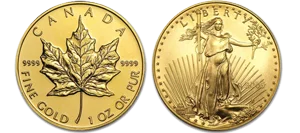
| Canadian Gold Maple Leaf | 24k (.9999) | 31.11 g | Yes | Pure gold with anti-counterfeit security features, softer surface |
| American Gold Buffalo | 24k (.9999) | 31.10 g | Yes | The US Mint's pure gold coin, slightly higher premium than the Eagle |
My take after years of comparing dealer quotes: if you are buying gold to hold outside a retirement account and you only care about getting the most gold for your money, the Krugerrand usually wins or ties on price. If you want the coin inside a gold IRA, it is the wrong choice.
Can You Put Krugerrands in a Gold IRA?
No. The tax code (26 U.S. Code § 408(m)) treats coins as collectibles inside an IRA unless they meet specific rules. Gold bullion generally has to be at least .995 fine, and the 22-karat American Gold Eagle only qualifies because the law names it directly. The Krugerrand is .9167 fine and has no such exception, so custodians will not accept it. If a retirement account is your goal, my complete gold IRA guide covers which coins and bars do qualify.
How to Tell If a Krugerrand Is Real
Counterfeit Krugerrands exist, mostly made of tungsten or brass with a thin gold layer. Before you pay a private seller, check:
- Weight: a 1 oz coin should read 33.93 grams on a scale accurate to 0.01 g.
- Size: 32.77 mm across and 2.84 mm thick. Fakes that get the weight right with tungsten often end up too thick or too small.
- Magnet: gold is not magnetic. If the coin sticks to a strong magnet, walk away (passing this test does not prove it is real).
- Ring: a real Krugerrand gives a clear, long ring when balanced on a fingertip and tapped. Fakes tend to thud.
- Details: crisp lettering in English and Afrikaans, the springbok, the year and “FYNGOUD 1 OZ FINE GOLD” on the reverse.
Buying from an established dealer removes most of this risk. My guide to gold scams covers the pitches to avoid.

Buying and Selling Krugerrands: What to Expect
- Premiums: common-date (random year) 1 oz Krugerrands from large dealers typically sell for a few percent over spot. Fractional sizes carry higher premiums per ounce, so a 1/10 oz coin costs more per gram of gold than a 1 oz coin.
- Buyback: because nearly every dealer in the world knows the coin, you can usually sell close to spot. My guide to selling gold and silver explains how to compare offers.
- Proof Krugerrands: collector versions with mirror finishes sell for well above melt. They can be lovely for a collection or as a gift, but the premium is much higher than on the bullion coin and you may not get it back when you sell.
- Reporting: dealers have historically filed Form 1099-B when someone sells 25 or more 1 oz Krugerrands in one transaction, although CoinWeek notes some dealers now interpret the guidance differently. See my overview of reporting requirements for gold investments.
Before you buy
I do not give financial advice. A Krugerrand is a bullion coin, so its value rises and falls with gold, and gold can drop as well as climb. Collector and proof versions carry much higher premiums than the standard coin. Talk to your financial advisor and do your own due diligence before buying any precious metal.
See how the Krugerrand stacks up against the coins most investors buy in my list of the top gold coins for investors.
Krugerrand FAQ
How much is a Krugerrand worth today?
A 1 oz gold Krugerrand contains exactly one troy ounce of gold, so its melt value equals the gold spot price, around $4,050 in early November 2026. Dealers typically sell common dates a few percent above spot and buy them back slightly below it.
How much gold is in a Krugerrand?
The 1 oz coin contains 1.0000 troy ounce (31.10 grams) of fine gold. It weighs 33.93 grams in total because it is 22 karat, with 8.33% copper added for durability. The 1/2, 1/4 and 1/10 oz coins contain those exact amounts of fine gold.
Is it legal to own Krugerrands in the USA?
Yes. The United States banned Krugerrand imports in 1985 as part of apartheid-era sanctions, but most sanctions were lifted in 1991. Today Krugerrands are bought and sold freely by American dealers and collectors.
Why is a Krugerrand so valuable?
Its value comes from its gold. Each 1 oz coin holds a full troy ounce of gold, and because it is the oldest and one of the most widely traded bullion coins in the world, dealers everywhere recognize it and will buy it close to the gold price.
Can I put Krugerrands in a gold IRA?
No. Krugerrands are .9167 fine, below the .995 minimum the IRS generally requires for gold bullion in an IRA, and they are not covered by the special exception that applies to the American Gold Eagle. Consider IRA-eligible coins like the Gold Eagle, Gold Buffalo or Gold Maple Leaf instead.
Are Krugerrands a good investment?
I do not give financial advice. Krugerrands are a low-premium way to own physical gold, so their value tracks the gold price closely, which can go down as well as up. Talk to your financial advisor and do your own due diligence before buying.
Why are Krugerrands orange or copper colored?
They are 22 karat gold alloyed with copper. The copper gives them a warmer, reddish tone than 24 karat coins like the Maple Leaf and makes them much more resistant to scratches.
How can I tell if a Krugerrand is fake?
Weigh and measure it. A genuine 1 oz Krugerrand weighs 33.93 grams, is 32.77 mm wide and 2.84 mm thick, is not magnetic, and rings clearly when tapped. If the numbers are off, or the seller is pushing a price well below spot, get it tested by a reputable dealer.
Do I have to report selling Krugerrands?
Dealers have historically filed Form 1099-B when a customer sells 25 or more 1 oz Krugerrands in a single transaction, though practices vary. Profits on gold are taxable either way, so keep your receipts and ask a tax professional how the rules apply to you.
Are proof Krugerrands worth more than regular ones?
Usually yes, because collectors pay for the mirror finish, low mintage and packaging. That premium is much higher than on the bullion coin, though, and you may not recover it when you sell, so proofs make more sense for a collection or a gift than as a way to buy gold.
The Bottom Line
The Krugerrand is still the original, and for buying an ounce of gold to keep at home or in a safe deposit box it remains one of the cheapest and most liquid ways to do it. Just know its two limits: it cannot go in a gold IRA, and fancy proof versions cost far more than their gold. Check the live gold price before you buy, compare a couple of dealer quotes, and talk to your financial advisor about how much physical gold makes sense for you.
The information on this page is not investment, tax or financial advice. Speak to your financial advisor and do your own due diligence before buying precious metals.

 Gold: $3,645.36
 Silver: $43.80
 Platinum: $1,332.75
 Palladium: $892.72
 Bitcoin: $61,491.97
 Ethereum: $1,720.15