
 Gold IRA
 Silver
 Gold
Gold Platinum
 Palladium
 Bitcoin
 Ethereum
 Gold Calculators
 Questions? Call (626) 605-3152
Canadian Gold Maple Leaf Coins: 2026 Buyer’s Guide + Review
Disclosure: We are reader-supported. If you purchase from a link on our site, we may earn a commission. Learn more
Canadian Gold Maple Leaf coins are among the most recognizable and widely traded pure-gold bullion coins in the world. They’re struck by the Royal Canadian Mint (a Canadian Crown corporation), and their weight and purity are backed by the Mint’s guarantee.
Free 2026 Gold & Silver Investing Kit (Top Pick)
If you’re researching coins like the Gold Maple Leaf for diversification (including IRA use in the U.S.), this free kit is a solid starting point. Disclosure: we may earn a commission if you request a kit through this link.
Canada’s Gold Maple Leaf is famous for its 99.99% (.9999) gold purity. The Royal Canadian Mint has also issued select “five nines” releases at .99999 fineness, and even limited single-source issues where the gold is traceable to one Canadian mine. millesimal fineness is simply the way bullion purity is expressed (for example, .9999 = 999.9 parts per 1,000).
Development, History and Introduction
The Gold Maple Leaf was introduced in 1979 and quickly became a global go-to for investors who wanted a government-issued bullion coin with high purity. It’s often considered the second major modern bullion-coin series after the Krugerrand.
The first Gold Maple Leafs were struck at .999 fine gold (24-karat). In 1982, the Mint upgraded the standard bullion coin to .9999 fine, helping set the modern expectation that “top tier” sovereign bullion should be 99.99% pure.
Over time, the Mint has released special higher-purity and premium variations, including limited “five nines” (.99999) products. In recent years, the Mint also introduced Single Mine / Single Source Gold Maple Leaf bullion issues for buyers who care about supply-chain transparency and traceable origin.
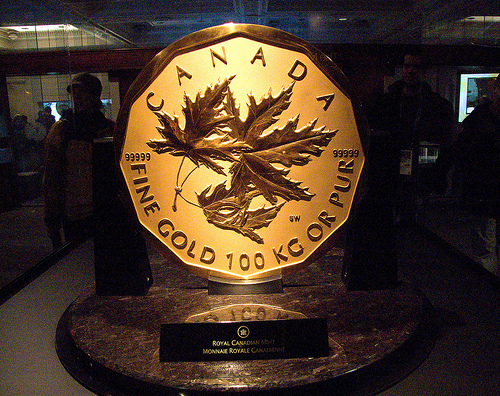
The $1 Million “Big Maple Leaf” (2007): In 2007, the Royal Canadian Mint drew global attention with a massive 100 kg Gold Maple Leaf coin carrying a $1 million CAD face value and struck at .99999 fineness. Only a tiny number were made, and its market value has always been tied to the underlying gold price (not the face value).
Canadian Gold Maple Leaf Physical Characteristics
Coin Design
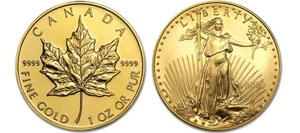
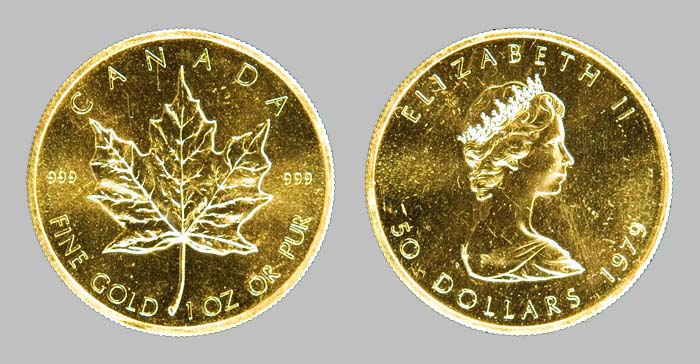
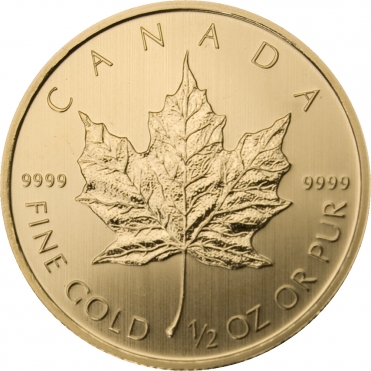
Reverse (tails): The reverse features Canada’s iconic maple leaf design by Walter Ott, plus inscriptions for “CANADA,” the coin’s purity, and its weight (for example, FINE GOLD 1 OZ OR PUR).
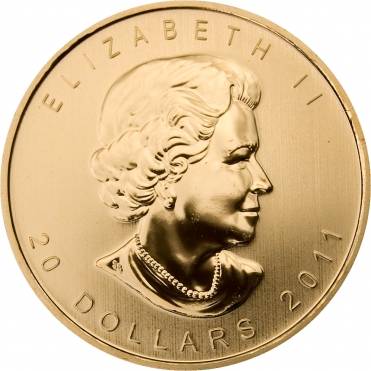
Obverse (heads): Historically, Gold Maple Leafs have featured the effigy of Queen Elizabeth II (with updated portraits over the decades). Newer issues now feature King Charles III. If you’re buying for a specific “era” (Elizabeth vs. Charles), always check the year on the listing photos.
Anti-counterfeiting upgrades: Modern Gold Maple Leafs include a distinct, fine-line background (radial lines) plus a micro-engraved security mark. The Mint also uses additional authentication technology on newer-dated coins distributed through registered channels. These features are a big reason Maple Leafs stay popular with investors who want an easy-to-verify coin.
Specifications
The Mint has produced a variety of sizes over the years, but the most common investor-friendly denominations are:
- 1 oz (often a $50 CAD face value)
- 1/2 oz (often $20 CAD)
- 1/4 oz (often $10 CAD)
- 1/10 oz (often $5 CAD)
- 1/20 oz (often $1 CAD)
Note: exact specifications and face values can vary for special editions. If you’re buying a premium or limited release, verify the listing’s specs against the Royal Canadian Mint product details.
| Weight (oz) | 1 | 1/2 | 1/4 | 1/10 | 1/20 |
| Weight (g) | 31.110 | 15.554 | 7.777 | 3.111 | 1.556 |
| Purity (per 1.000) | .9999 | .9999 | .9999 | .9999 | .9999 |
| Diameter (mm) | 30.0 | 25.0 | 20.0 | 16.0 | 14.1 |
| Face Value ($CAD) | $ 50 | $ 20 | $ 10 | $ 5 | $ 1 |
One practical downside of ultra-high purity: Pure gold is soft. Compared to alloyed coins, a .9999 coin can pick up small handling marks more easily if it’s not stored carefully. If you’re buying purely for bullion exposure (not collectibles), consider choosing sealed/packaged coins and avoid unnecessary handling.
Thinking about holding physical gold in a retirement account?
Here’s a simple next step: request the free 2026 kit and use it as your checklist for rules, storage, and common pricing traps. Disclosure: we may earn a commission if you request a kit through this link.
Canadian Gold Maple Leaf Coin Pricing
Gold Maple Leafs are legal tender in Canada, but the face value is mostly symbolic. In real life, the market price is driven by:
- The spot price of gold (the main driver)
- Dealer premium (minting, distribution, demand, and availability)
- Condition and packaging (sealed coins often command a bit more)
- Special editions (limited mintages and “five nines” products can carry higher premiums)
If you want to track gold day-to-day, use our live pricing page here: current gold price. For bullion coins, just remember: the premium you pay over spot matters, especially if you’re buying fractional sizes.
Investing in Canadian Gold Maple Leaf Coins Through an IRA (U.S.)
In the U.S., retirement accounts generally can’t buy “collectibles,” but there are important exceptions for certain bullion coins and bullion bars that meet IRS fineness rules and are held properly by an approved trustee/custodian. That’s the foundation of what most people mean by a Gold IRA.
If you want the full step-by-step, start here: Complete Gold IRA Guide.
Here are the key practical points most investors need to know:
- You typically need a self-directed IRA structure to hold physical metals. (More here: investing in gold with a self-directed IRA.)
- The metal must be stored with an approved depository or storage arrangement through your custodian, not in your home safe. (Guide: IRS-approved depositories & storage.)
- If you’re funding from a workplace plan or existing IRA, you’ll usually use a transfer or rollover. (Steps: Gold IRA rollover guide.)
- Minimum purchase amounts are usually set by the dealer or custodian (not by the IRS). Some investors start small, others prefer larger rollovers to reduce fee drag.
Where to buy Gold Maple Leafs: Standard bullion Gold Maple Leafs are usually sold through registered bullion dealers (the Mint’s distribution channel), while some premium versions and collector products may be sold directly through the Mint’s retail store or special programs. Either way, stick to reputable dealers, verify the year/portrait you’re buying, and compare premiums.
Canadian Gold Maple Leaf Coin FAQ
Quick note: This FAQ is educational and not financial, legal, or tax advice. Always confirm specs and rules with your dealer, custodian, and official sources.
What is a Canadian Gold Maple Leaf coin?
Answer: The Canadian Gold Maple Leaf is an official Canadian gold bullion coin produced by the Royal Canadian Mint. It is primarily bought and sold for its gold content (bullion value), not for spending as money.
How pure is the Canadian Gold Maple Leaf?
Answer: Standard bullion Gold Maple Leafs are 99.99% gold (.9999 fine). The Mint has also issued limited releases in 99.999% (.99999) purity (often called “five nines”).
When was the Gold Maple Leaf first introduced?
Answer: The Gold Maple Leaf debuted in 1979 and became a major alternative to other widely traded bullion coins at the time.
Were early Gold Maple Leafs .999 fine instead of .9999?
Answer: Yes. Earlier issues started at .999 fine gold, and the standard bullion coin later moved to .9999. If you are buying a vintage year, confirm the fineness on the listing and photos.
Is the Gold Maple Leaf legal tender?
Answer: Yes, it has a Canadian dollar face value, but it is almost never used for purchases because its gold value is usually far higher than the face value.
What is the face value of a 1 oz Gold Maple Leaf?
Answer: The 1 troy ounce Gold Maple Leaf is commonly stamped with a $50 CAD face value. Fractional coins typically have lower face values.
What sizes (weights) are most common?
Answer: The most common investor sizes are 1 oz, 1/2 oz, 1/4 oz, 1/10 oz, and 1/20 oz. Other special sizes exist in some years.
How much is a 1 oz Gold Maple Leaf worth today?
Answer: It is typically worth spot price of gold + dealer premium. The premium varies by supply, demand, and whether the coin is sealed, mint-fresh, or a special edition.
To track the gold spot price quickly, see: current gold price.
Why does the Gold Maple Leaf sometimes cost more than spot?
Answer: The difference is called the premium. It covers minting, distribution, dealer costs, and market demand. Fractional coins usually have higher premiums per ounce than 1 oz coins.
What security features help prevent counterfeits?
Answer: Modern Gold Maple Leafs include multiple anti-counterfeiting features, commonly including radial line detailing, a micro-engraved security mark, and the Mint’s authentication program used for newer bullion issues.
If you are buying older coins, security features may differ by year, so verify the year-specific specs.
What is “Bullion DNA” on Gold Maple Leafs?
Answer: Bullion DNA is a Royal Canadian Mint anti-counterfeiting technology and registration approach associated with newer Maple Leaf bullion coins. It is designed to help authenticate legitimate coins through registered distribution channels.
How do I tell if a Gold Maple Leaf is real?
Answer: The safest method is to buy from a reputable dealer and verify the coin using professional tools (for example, a bullion verifier). At home, you can do basic checks like dimensions, weight, and non-magnetic behavior, but those checks alone do not guarantee authenticity.
Do Gold Maple Leafs scratch easily?
Answer: They can. Pure gold is soft, so .9999 coins may show handling marks more easily than alloyed coins. Avoid touching the surfaces and store the coin in its capsule or sealed packaging.
What is the difference between “BU” and “Proof” Gold Maple Leafs?
Answer: BU (Brilliant Uncirculated) is a standard bullion finish intended for investors. Proof coins are struck with special dies and finishes for collectors and usually carry higher premiums.
Are Gold Maple Leafs good for long-term holding?
Answer: Many investors like them because they are globally recognized, high purity, and easy to resell. Your results still depend on gold prices and the premium you pay when buying.
Are Canadian Gold Maple Leafs IRA eligible in the U.S.?
Answer: Often, yes. Certain bullion coins can qualify under U.S. retirement rules if they meet fineness standards and are held correctly through an approved IRA custodian arrangement.
Next step guide: Complete Gold IRA Guide
Can I store IRA gold at home (like in my safe) if it’s a Gold Maple Leaf?
Answer: Generally, no. If gold is held inside an IRA, it typically must be held by the IRA custodian or through approved storage arrangements. Taking personal possession can trigger taxes and penalties.
Storage explainer: IRS-approved depositories and storage
Is the Gold Maple Leaf GST/HST exempt in Canada?
Answer: In many cases, investment-grade precious metals (including certain high-purity gold coins) can be treated differently for GST/HST than typical consumer goods. The Gold Maple Leaf’s purity typically meets the “precious metal” threshold used in Canadian GST/HST definitions.
Always confirm your specific transaction with the dealer and current official definitions before you buy.
Do I pay capital gains tax when I sell Gold Maple Leafs?
Answer: In many situations, profits from selling physical gold are treated as capital gains. The exact tax outcome depends on your country, your intent (investing vs. trading as a business), and your personal tax situation.
Does the Gold Maple Leaf contain “only Canadian-mined gold”?
Answer: Not always. The Mint has issued special “single source” products where gold is traceable to a specific Canadian mine, but standard bullion coins are not necessarily restricted to one mine or source unless the product specifically says so.
Gold Maple Leaf vs. American Gold Eagle: what’s the difference?
Answer: The biggest difference is purity. Gold Maple Leafs are typically .9999 fine, while Gold Eagles are alloyed (lower fineness but more scratch resistant). Premiums and availability vary, so compare total cost, resale liquidity, and your goals.
Is the Gold Maple Leaf a “collectible” coin?
Answer: Most standard issues are bullion coins and priced close to gold value plus premium. Proofs, special finishes, and limited mintages can behave more like collectibles and may have higher premiums.
Where can I buy Canadian Gold Maple Leaf coins safely?
Answer: Buy from reputable bullion dealers, established coin shops, or trusted online platforms with clear buyback policies. If you are buying for an IRA, buy through your IRA metals dealer workflow so storage and documentation stay compliant.
Helpful: Gold IRA rollover steps
What is the best way to store Gold Maple Leafs?
Answer: Keep coins in capsules, tubes, or sealed packaging, and store them in a dry, stable environment. For larger holdings, consider insured storage options. If held in an IRA, storage must follow the custodian’s rules.
Should I buy 1 oz or fractional Gold Maple Leafs?
Answer: Many buyers prefer 1 oz for lower premium per ounce. Fractionals can be useful for flexibility, but you often pay a higher premium per ounce.
What other bullion coins are similar to the Gold Maple Leaf?
Answer: Comparable government-issued bullion coins include the Krugerrand and other widely recognized sovereign issues. The best choice depends on premium, resale liquidity, and whether you prefer higher purity.
Related: Krugerrand overview
Is a Gold Maple Leaf better than a gold bar?
Answer: Coins can be easier to resell and are widely recognized, while bars sometimes have lower premiums for larger sizes. Compare the buy premium, the resale spread, and how easy it is to verify the item.
Do newer Gold Maple Leafs look different than older ones?
Answer: Yes. Over time, the obverse portrait has changed (including newer coins featuring King Charles III), and security features have evolved. If a specific portrait matters to you, buy by exact year and photos.

 Gold: $3,995.86
 Silver: $53.89
 Platinum: $1,552.45
 Palladium: $1,044.17
 Bitcoin: $80,813.30
 Ethereum: $2,356.07