
 Gold IRA

 Silver
 Gold
 Platinum
 Palladium
 Bitcoin
 Ethereum
 Gold Calculators
 Questions? Call (626) 605-3152
About Our Reviews: How We Rate Gold IRA Companies (2026)
Disclosure: We are reader-supported. If you purchase from a link on our site, we may earn a commission. Learn more
I have been researching and writing about gold IRA companies for more than twenty years, and the question I get most is simple: “Which company can I actually trust?” Star ratings on review sites only answer half of that. A dealer can have glowing reviews and still sell you a coin at twice what it is worth. So the GIG Global Rating combines what customers say with what I have learned matters most: what a company actually sells you, at what markup, and how openly it does it.
See how every major gold IRA company scores under this method, with fees, minimums and ratings side by side.
The GIG Global Rating in One Minute
Every precious metals dealer gets a score from 1 to 5 on five factors. The weighted total is its Global Rating, shown to one decimal on its review. Last updated November 2026.
| Factor | Weight | What it measures |
|---|---|---|
| Pricing and product focus | 25% | Does the company steer you to standard bullion at low premiums, or to premium coins with big markups? |
| Customer reputation | 25% | Weighted average of independent review sites, by number of reviews |
| Transparency, leadership and marketing | 20% | Posted prices, fees and buyback terms, a named and visible leadership team, and how heavily it leans on paid celebrity endorsers |
| Fees, minimums and account options | 15% | Setup, annual and storage fees, the minimum purchase, and the choice of custodians and storage |
| Longevity and track record | 15% | Years in business, complaint patterns and any regulatory history |
Table of Contents
- Factor 1: Pricing and Product Focus (25%)
- Factor 2: Customer Reputation (25%)
- Factor 3: Transparency, Leadership and Marketing (20%)
- Factor 4: Fees, Minimums and Account Options (15%)
- Factor 5: Longevity and Track Record (15%)
- Red Flags That Cap a Score
- How We Rate IRA Custodians
- How We Rate Local Coin Shops
- What the Ratings Mean
- How We Make Money, and Why It Does Not Change a Score
- Updates and Corrections
- FAQ: How Our Ratings Work
Factor 1: Pricing and Product Focus (25%)
This is the factor that separates our rankings from a simple review roundup, and it is the biggest reason a company lands at the top or bottom of our list.
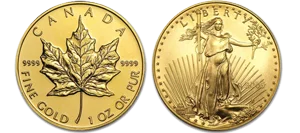
Gold IRA companies make most of their money on the spread between what they pay for metal and what they charge you. On standard bullion such as American Gold Eagles, Gold Buffalos, Canadian Maple Leafs and common bars, that markup is usually small, the price is easy to check against spot, and you can sell the coin almost anywhere. Premium coins are a different story. You will hear them called semi-numismatic, exclusive, rare, low-mintage, low-circulation, limited-edition or proof coins. They often carry premiums of 30% to 50% or more over the metal value, and some companies have charged as much as 100% over spot.
That is not a theoretical risk. In 2023 the CFTC and state regulators charged Red Rock Secured with telling customers markups were 4% to 29% while actually charging roughly 100% to 130% on the coins it sold, much of it through retirement accounts. (I cover that case in my Red Rock Secured review.)
Premium coins are not all bad. Proof coins have a better finish, more shine and more luster, and some collector coins do command higher prices later, which is why collectors buy them. But realizing that value takes knowledge, patience and the right buyer, and there is no guarantee you ever get the premium back. For retirement savings I believe the goal should be the most gold for your money. My guide to proof, uncirculated and bullion coins explains the difference in detail.
How I score it without mystery shopping: prices are custom-quoted on the phone and change daily, so a one-time quote would be out of date within a week. Instead I look at what each company features in its catalog and its marketing, whether it publishes prices or regular low-premium specials, what customers report being pitched (the 1- and 2-star reviews are especially telling), any regulatory filings about markups, and what I have seen first-hand from working with these companies over the years.
| Score | What it looks like |
|---|---|
| 5 | Recommends standard bullion by default, publishes prices or regular low-premium specials, tells you which products carry the lowest premiums |
| 4 | Mostly standard bullion; premium coins available but not pushed |
| 3 | Mixed catalog; pricing only by quote; some reports of upselling |
| 2 | Marketing centered on “exclusive” or proof coins; repeated complaints about markups |
| 1 | Regulatory findings or a clear pattern of undisclosed, very high markups |
Factor 2: Customer Reputation (25%)
This is the original GIG Global Rating formula, and it still forms the reputation score. I gather ratings only from independent review platforms that have no affiliate or financial relationship with the companies they rate:
- Better Business Bureau (BBB)
- Business Consumer Alliance (BCA)
- Trustpilot
- TrustLink
- Google Business Profile
- Yelp
- ShopperApproved
- Sitejabber
- Yellow Pages
Instead of a plain average, I use a weighted mean, so a site with 1,000 reviews counts far more than a site with three. Each site's average rating is multiplied by its number of reviews, those results are added up, and the total is divided by the combined number of reviews:

Here is how that played out for two fictional companies. Company X had 4.8 stars from 300 BBB reviews, 4.5 stars from 120 Google reviews and 1 star from 3 Yelp reviews, for a reputation score of 4.7:

Company Y had 4 stars from 100 Trustpilot reviews, 3.8 from 1,200 TrustLink reviews, and a handful of low ratings on Yelp, Facebook and Google, for a score of 3.8:

What changed in 2026:
- Sites with fewer than 10 reviews for a company are left out, because a handful of reviews can swing too far either way.
- Reviews from the last 24 months carry more weight than older ones, since staff, ownership and pricing change.
- I read the negative reviews, not just the stars. A pattern of complaints about being pressured into premium coins counts against the pricing factor, too.
- Every review lists the date I last checked each profile.
Factor 3: Transparency, Leadership and Marketing (20%)
A company that is confident in its pricing tends to show it. I give credit for published prices or price examples, a published fee schedule, written quotes, clear buyback terms and a named custodian and depository.
Leadership matters too. I want to know who I am dealing with, and so should you. Companies whose founders and executives are named, public and accountable, the way Noble Gold founder Collin Plume is very visible, score better. A company that hides its management team, or lists no one at all on its website, LinkedIn or state filings, is a red flag in my book and loses points here.
This factor also covers celebrity and political endorsements, and I want to be upfront about my view here. Paid ambassador deals with television hosts, commentators and politicians can cost millions of dollars, and some reportedly pay the endorser on every sale. That money has to come from somewhere, and in my opinion it usually comes from the buyer in the form of higher markups. A famous spokesperson tells you how much a company spends on marketing, not how it treats customers, so a heavy reliance on paid endorsers counts against a company in this score. The FTC's guidance on endorsements, influencers and reviews is a good primer on how those relationships are supposed to be disclosed.
Factor 4: Fees, Minimums and Account Options (15%)
For gold IRAs, I compare one-time setup and wire fees, annual custodian fees, storage fees (and whether segregated storage costs extra), and the minimum purchase. I also look at choice: whether you can pick from more than one IRA custodian, which IRS-approved depositories the company works with, whether segregated storage is offered, and whether it handles Roth, SEP and 401(k) rollovers as well as traditional IRAs. Flat fees score better than fees that scale with your balance, and promotions such as a waived first year only count when the terms are published. For cash purchases, I look at shipping, insurance and any small-order fees.
Factor 5: Longevity and Track Record (15%)
Time in business matters in an industry where companies come and go. I look at years operating, ownership changes, the number and pattern of BBB complaints relative to the company's size, and any history with regulators such as the CFTC, the SEC or state securities and consumer protection agencies.
Red Flags That Cap a Score
Some problems outweigh any number of good reviews. When one of these applies, the Global Rating is capped no matter how the other factors score:
| Red flag | Maximum rating |
|---|---|
| Regulatory finding or settlement involving undisclosed markups or misrepresentation | 2.0 |
| Pending regulatory action or lawsuit by a government agency | 2.5 |
| Company closed, bankrupt or no longer accepting customers | Not rated (review carries a warning banner) |
| Website offline, or too few independent reviews to measure (fewer than 10 on every platform) | Not rated until there is enough verifiable information |
How We Rate IRA Custodians
Custodians such as Equity Trust or Kingdom Trust hold your IRA but do not sell metals, so the pricing and product factor does not apply. Their Global Rating uses customer reputation (35%), fees (30%), transparency and service (20%) and longevity and track record (15%). You can compare them on our gold IRA custodians page.
How We Rate Local Coin Shops
A brick-and-mortar coin shop is a different kind of business from an online gold IRA company. You can walk in, see the live buy and sell prices on the board, hold the coin before you pay and leave with it the same day. Rating a shop on the same scale as a phone-based IRA dealer would not be fair to either, so local dealers get their own version of the Global Rating:
| Factor | Weight | What it measures |
|---|---|---|
| Price transparency and spreads | 25% | Posted live prices in store or online, and the gap between what the shop charges and what it pays |
| Customer reputation | 30% | Weighted average of Google, Yelp and other review sites, which matter more for a local business |
| Selection and services | 15% | Bullion range, appraisals, buying from the public and precious metals IRA support |
| Transparency and leadership | 15% | Named owners, state licensing and a real, visitable storefront |
| Longevity and track record | 15% | Years in business and complaint history |
One note on local reviews: coin shops tend to score lower on Google and Yelp than online dealers, mostly because people selling coins expect retail prices and a dealer can only pay wholesale. I read the pattern of complaints, not just the stars, before scoring reputation.
What the Ratings Mean
| Global Rating | What it means |
|---|---|
| ⭐ 4.5 to 5.0 | Excellent. Strong on pricing, reputation and transparency. |
| ⭐ 4.0 to 4.4 | Very good, with one or two areas to watch. |
| ⭐ 3.0 to 3.9 | Mixed. Fine for some buyers; compare carefully. |
| ⭐ Below 3.0 | Use caution. Read the full review before you call. |
How We Make Money, and Why It Does Not Change a Score
Gold IRA Guide is reader-supported. Some of the companies we review pay us a commission when a reader becomes a customer, and our disclosure page explains exactly how that works. A partnership never buys a higher rating or a better spot in our rankings, and partners are scored on the same five factors as everyone else. The reason a company like Noble Gold sits near the top is its focus on standard bullion at competitive markups, not its relationship with us.
Updates and Corrections
I recheck every company at least once a year, and sooner when there is news: a regulatory action, a closure, an ownership change or a sharp move in customer reviews. Retirees have been targeted by precious metals fraud often enough that regulators launched a joint effort to warn them, and my guide to gold scams lists the warning signs. If you represent a company we review, or you spot anything inaccurate, please contact us and I will correct anything that can be verified. You can read more about who we are on our about page.
Our ratings are research and opinion, not financial advice. Talk to your financial advisor and do your own due diligence before you buy precious metals or move retirement money.
FAQ: How Our Ratings Work
How does Gold IRA Guide rate gold IRA companies?
Each dealer is scored from 1 to 5 on five factors: pricing and product focus (25%), customer reputation from independent review sites (25%), transparency, leadership and marketing (20%), fees, minimums and account options (15%), and longevity and track record (15%). The weighted total is the GIG Global Rating.
Why does pricing count as much as customer reviews?
Because a company can have excellent reviews and still sell premium or semi-numismatic coins at 30% to 100% over the metal value. The type of product a dealer pushes, and its markup, often matters more to your returns than how friendly the sales call was.
Do companies pay to be ranked higher?
No. Some companies pay us a commission when readers become customers, which is how the site is funded, but a partnership never buys a higher score or a better position. The same five factors apply to every company.
Why do celebrity endorsements lower a score?
Paid ambassador deals can cost millions and sometimes pay the endorser on every sale. In our view that cost usually reaches buyers through higher markups, and an endorsement says nothing about how a company treats its customers.
How often are the ratings updated?
I review each company at least once a year and whenever something significant happens, such as a regulatory action, a closure or a big shift in customer reviews. Each review shows when its ratings were last checked.
How are IRA custodians rated differently?
Custodians hold your IRA but do not sell metals, so they are scored on customer reputation (35%), fees (30%), transparency and service (20%), and longevity and track record (15%), without the pricing and product factor. Local coin shops have their own version too, weighted toward posted prices, spreads and local reviews.

 Gold: $3,990.92
 Silver: $51.78
 Platinum: $1,542.07
 Palladium: $1,034.80
 Bitcoin: $73,947.13
 Ethereum: $2,056.06